
Why Won’t My Puppy Stop Biting? Puppy biting is a normal part of development, but that doesn’t mean it should be ignored. Puppies naturally use their mouths to explore the world, communicate with their littermates, relieve teething discomfort, and interact with people. The key is teaching them what is appropriate to bite before unwanted habits become established.
During the first few months of life, puppies go through one of their most important learning stages. Every interaction shapes their future behaviour. Without consistent guidance, behaviours such as biting, mouthing, chewing, and jumping can become long-term habits. With positive, reward-based puppy training, however, puppies learn bite inhibition, self-control, and appropriate ways to play and communicate.
Whether your puppy is biting your hands, grabbing clothing, nipping during play, or chewing household items, early training can make a significant difference. Teaching gentle behaviour from the beginning helps build confidence, strengthens the bond between you and your puppy, and lays the foundation for a calm, well-mannered adult dog.
In this complete guide, you’ll learn:
- Why puppies bite
- Whether puppy biting is normal
- The most common reasons puppies won’t stop biting
- How teething affects puppy behaviour
- Practical ways to stop puppy biting
- When biting may indicate a behavioural problem
- Why positive reinforcement is the most effective training method
- When professional puppy training can help
By understanding why your puppy won’t stop biting, you’ll be better equipped to encourage gentle behaviour, prevent unwanted habits, and raise a confident, well-behaved companion.
Why Do Puppies Bite?
Puppy biting is one of the most natural behaviours you’ll see during the first few months of life. While it can be frustrating when tiny teeth meet your hands or clothes, puppies aren’t trying to be naughty or aggressive. In most cases, they’re simply learning how to interact with the world around them. With the right guidance and positive dog training on the Gold Coast, puppies quickly learn appropriate ways to play, communicate, and interact with people.
Unlike humans, puppies don’t have hands to investigate objects. Instead, they use their mouths to explore textures, communicate, play, and satisfy their natural curiosity. Every new experience—from toys and furniture to shoes and fingers—becomes something worth investigating.
Understanding why puppies bite is the first step towards teaching them better habits.
Puppies Explore With Their Mouth

A puppy’s mouth works much like a baby’s hands. Everything is new, exciting, and worth investigating.
As puppies grow, they naturally explore:
- New toys
- Different textures
- Household objects
- Shoes and clothing
- Furniture
- Hands and feet
- Outdoor environments
This behaviour is a completely normal part of development. Rather than punishing exploration, owners should redirect puppies towards appropriate chew toys and reward desirable choices. Our Puppy Behaviour Training Gold Coast program helps owners teach appropriate chewing habits and calm behaviour using positive, reward-based training methods.
Puppies Learn Through Play
Play is one of the most important ways puppies learn.
When puppies interact with their littermates, they naturally wrestle, chase, tug, and mouth each other. Through these playful interactions, they begin developing bite inhibition—the ability to control how hard they bite.
If one puppy bites too hard, another puppy usually stops playing or walks away. This immediate feedback teaches puppies to use a gentler mouth during future play.
When puppies join a new family, it’s up to their owners to continue teaching this important life skill through calm, consistent training.
Teething Can Make Puppies More Bitey

One of the biggest reasons puppies bite is teething.
Between approximately 3 and 6 months of age, puppies lose their baby teeth while adult teeth begin emerging. This process can cause sore gums, discomfort, and an increased desire to chew.
Common signs of teething include:
- Chewing furniture
- Biting hands more often
- Chewing shoes
- Increased interest in chew toys
- Mild gum sensitivity
- Restlessness
Providing appropriate chew toys can help relieve discomfort while reducing the temptation to bite inappropriate objects. If your puppy continues to bite excessively despite consistent management, our Private Dog Training sessions provide personalised guidance to address teething-related behaviours and teach appropriate chewing habits using positive reinforcement.
Puppies Seek Attention
Sometimes biting simply works.
If every time your puppy grabs your sleeve, you chase them, laugh, talk, or engage in play, they’ve learned that biting gets attention.
Even negative attention can unintentionally reinforce unwanted behaviour.
Instead, reward calm behaviour, redirect biting onto an appropriate toy, and give attention when your puppy makes good choices.
Overexcitement and Overstimulation
Just like young children, puppies can become overly excited.
Visitors, play sessions, busy parks, new environments, or lots of activity can leave puppies feeling overwhelmed.
When excitement levels rise, puppies often lose self-control and become more mouthy.
Signs your puppy may be overstimulated include:
- Zoomies
- Jumping
- Grabbing clothing
- Barking
- Constant nipping
- Difficulty settling
In these situations, providing a quiet break, structured routine, or calming activity often works better than continuing high-energy play. Puppies that enjoy regular socialisation and structured enrichment, such as our Doggy Daycare Program, can also learn to regulate their energy levels and develop calmer behaviour in a supervised environment.
Overtired Puppies Bite More
Many owners assume a biting puppy simply needs more exercise.
In reality, puppies often bite because they’re tired.
Young puppies require 16 to 20 hours of sleep each day. Without enough rest, they can become cranky, impulsive, and much more likely to bite.
If your puppy suddenly becomes wild after a busy day, they may simply need a chance to rest.
Frustration Can Lead to Biting
Puppies are still learning how to cope with frustration.
If they can’t reach a toy, become tangled in a lead, are prevented from greeting another dog, or don’t understand what’s expected, they may respond by biting nearby objects—or even their owner. Regular socialisation and structured learning environments, such as our Doggy Daycare Gold Coast HQ, can help puppies build confidence, practise appropriate social skills, and develop better impulse control.
Rather than viewing this as disobedience, consider whether your puppy needs clearer guidance, more patience, or a simpler training exercise.
Teaching impulse control through reward-based training helps puppies manage frustration in a healthy way.
Fear and Anxiety
Not all puppy biting comes from excitement.
Some puppies bite because they feel worried or overwhelmed.
Sudden noises, unfamiliar people, rough handling, or frightening experiences can trigger defensive behaviours.
Warning signs include:
- Tail tucked
- Body stiffness
- Lip licking
- Avoiding eye contact
- Growling
- Retreating before biting
If your puppy regularly shows signs of fear, avoid punishment and seek guidance from a qualified trainer or veterinarian to build confidence through positive experiences.
Is Puppy Biting Ever Aggressive?

Most puppy biting is normal mouthing, not aggression.
Play biting is usually loose, bouncy, and accompanied by playful body language. Puppies often wag their tails, bow, or quickly return to play.
Aggressive behaviour, however, may involve:
- Repeated hard bites
- Growling with a stiff body
- Snapping without warning
- Guarding food or toys
- Lunging when approached
- Biting out of fear
If your puppy displays these behaviours consistently, professional assessment is recommended to identify the underlying cause and provide appropriate behaviour support.
Understanding why your puppy bites is the foundation of successful training. Rather than seeing biting as bad behaviour, think of it as an opportunity to teach your puppy appropriate ways to play, communicate, and interact with the world. With patience, consistency, and positive reinforcement, most puppies naturally develop better self-control as they mature. However, if your puppy’s biting becomes persistent, intense, or is accompanied by signs of fear or aggression, our Aggressive Dog Training Gold Coast program provides professional behaviour assessment and tailored support.
How to Stop Puppy Biting: Step-by-Step Training That Works
If your puppy won’t stop biting, the goal isn’t to stop all mouthing overnight—it’s to teach them what is appropriate to bite and how to use a gentle mouth. Puppies learn best through consistency, positive reinforcement, and short, enjoyable training sessions.
The following strategies help reduce puppy biting while building confidence, self-control, and good behaviour.
Teach Bite Inhibition
One of the most important lessons a puppy can learn is bite inhibition—the ability to control the strength of their bite.
Puppies normally begin learning this from their littermates. If one puppy bites too hard, play usually stops immediately. This teaches them that gentle play keeps the fun going.
You can continue this lesson by:
- Staying calm if your puppy bites too hard.
- Briefly ending the interaction if biting becomes excessive.
- Rewarding gentle play and calm behaviour.
- Restarting play once your puppy has settled.
Teaching bite inhibition doesn’t stop biting instantly, but it helps puppies develop better self-control as they grow.
Redirect Biting to Appropriate Toys
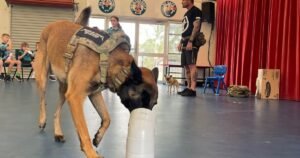
Rather than allowing your puppy to bite hands, clothing, or furniture, immediately redirect them to an appropriate chew toy. If your puppy’s mouthing develops into persistent overreaction to people, dogs, or everyday situations, our Reactive Dog Training Gold Coast program provides personalised support to address the underlying causes using positive, reward-based training.
Keep a variety of safe chew toys nearby so you can redirect unwanted biting before it becomes a habit.
Good options include:
- Durable rubber toys
- Puppy-safe teething toys
- Food-stuffed enrichment toys
- Rope toys for supervised play
- Long-lasting puppy chews
When your puppy chooses the toy instead of your hand, reward them with praise or a small treat.
This teaches your puppy exactly what they’re allowed to chew.
Help Your Teething Puppy
Teething is one of the biggest reasons puppies become extra mouthy.
Between 3 and 6 months of age, puppies lose their baby teeth while adult teeth develop. During this stage, chewing helps relieve sore gums.
To make teething easier:
- Provide appropriate chew toys.
- Rotate toys to keep them interesting.
- Offer puppy-safe frozen chew toys if recommended.
- Schedule short training sessions between rest periods.
- Avoid encouraging rough play with hands.
Meeting your puppy’s natural chewing needs often reduces unwanted biting around the home.
Use Reverse Time-Outs
Many owners have heard of giving puppies a “time-out.” An even more effective approach is the reverse time-out.
Instead of putting your puppy in isolation, calmly remove yourself from the interaction for 20–30 seconds if biting becomes excessive.
Here’s how:
- Stay calm and avoid yelling.
- Quietly stand up and walk away.
- Return once your puppy has settled.
- Reward calm behaviour before restarting play.
Your puppy quickly learns that biting makes the fun stop, while calm behaviour keeps it going.
Reward the Behaviour You Want
Puppies repeat behaviours that are rewarding.
Instead of focusing only on what your puppy is doing wrong, actively reward the behaviours you’d like to see more often.
Reward your puppy when they:
- Choose a toy instead of your hand.
- Sit calmly for attention.
- Settle quietly.
- Walk without biting the lead.
- Play gently.
- Respond to their name.
Using positive reinforcement helps puppies learn faster while building trust and confidence. The Australian Veterinary Association (AVA) also emphasises the importance of evidence-based animal care and working with qualified professionals to support your puppy’s health, welfare, and behavioural development.
For more guidance on developing calm, reliable behaviour, explore our Puppy Behaviour Training Gold Coast program.
Avoid Accidental Rewards
Many owners unknowingly encourage biting without realising it.
Common examples include:
- Turning biting into a chasing game.
- Laughing when your puppy grabs clothing.
- Continuing rough play after biting.
- Giving attention immediately after nipping.
Instead, stay calm, redirect to a toy, and reward appropriate behaviour.
Consistency from every family member is essential.
Give Your Puppy Enough Sleep

An overtired puppy is often a bitey puppy.
Young puppies typically need 16–20 hours of sleep each day to support healthy growth and learning.
Signs your puppy may need rest include:
- Constant zoomies
- Increased nipping
- Difficulty settling
- Ignoring cues they normally follow
- Becoming overly excited
Providing regular nap times throughout the day often reduces biting significantly.
Keep Training Sessions Short
Young puppies have very short attention spans.
Aim for:
- 2–5 minute sessions for young puppies
- Several sessions throughout the day
- Plenty of rewards
- A positive ending while your puppy is still engaged
Short, consistent practice is far more effective than one long session.
Puppy Biting Timeline: What to Expect at Every Age
Understanding what’s normal at each stage helps you set realistic expectations.
8–10 Weeks
Your puppy is settling into a new environment and learning how to interact with people.
Focus on:
- Name recognition
- Gentle handling
- Bite inhibition
- Toilet training
- Positive socialisation
- Redirecting biting to toys
10–12 Weeks
Confidence grows quickly during this stage.
Continue teaching:
- Sit
- Come
- Leave It
- Calm greetings
- Toy redirection
- Short lead introduction
Biting may still be frequent but should become easier to manage with consistent training.
3–4 Months
Teething often increases during this period.
Continue practising:
- Loose lead walking
- Recall
- Impulse control
- Gentle play
- Confidence building
Provide plenty of appropriate chew opportunities.
4–6 Months
Adult teeth begin replacing baby teeth.
Your puppy should now be developing:
- Better bite inhibition
- Improved focus
- Longer attention span
- More reliable obedience
Remain consistent, as adolescence is approaching.
6–12 Months
Although teething has usually finished, adolescent dogs may test boundaries.
Continue reinforcing:
- Recall
- Calm greetings
- Loose lead walking
- Settling on cue
- Good manners around people and dogs
Ongoing training helps maintain the habits established during puppyhood.
Common Puppy Training Mistakes to Avoid
Even dedicated owners can accidentally slow their puppy’s progress. Avoid these common mistakes to make training more effective.
Using Punishment
Yelling, smacking, or harsh corrections can create fear and damage trust. Reward-based training is a safer and more effective way to teach appropriate behaviour.
Playing Rough
Hand wrestling or encouraging your puppy to chase and bite hands may seem harmless, but it can reinforce unwanted mouthing.
Inconsistent Rules
If one person allows jumping or biting while another discourages it, your puppy receives mixed messages. Use the same commands and expectations across the household.
Not Providing Enough Mental Stimulation
Bored puppies often create their own entertainment through chewing and biting. Short training sessions, puzzle toys, enrichment activities, and sniffing games help keep young minds engaged.
Skipping Socialisation
Positive experiences with people, dogs, different environments, sounds, and everyday situations help puppies become confident adults. Socialisation should always be gradual, safe, and enjoyable.
When Should You Seek Professional Help?
Most puppy biting improves with patience and consistent training. However, professional guidance is recommended if your puppy:
- Frequently bites hard enough to break the skin.
- Growls or stiffens before biting.
- Guards food or toys aggressively.
- Shows fear around people or other dogs.
- Doesn’t improve despite consistent training.
Early support can prevent unwanted behaviours from becoming long-term habits while helping your puppy build confidence in a positive way.
Training isn’t about stopping puppies from being puppies—it’s about teaching them how to make good choices. With consistent routines, positive reinforcement, and age-appropriate guidance, most puppies naturally outgrow excessive biting and develop into calm, well-mannered companions. If you’re considering professional support, learn more about how much dog training costs in Gold Coast to find a program that suits your puppy’s needs and your training goals.
Should You Choose Professional Puppy Training?
Many puppy owners achieve great results with consistent training at home. However, working with an experienced trainer can provide expert guidance, accelerate progress, and help prevent common behaviour problems before they become long-term habits.
Professional puppy training isn’t just for puppies with behavioural issues—it’s designed to help owners build a strong foundation during the most important stages of a puppy’s development.
A qualified trainer can help you:
- Teach bite inhibition and reduce excessive puppy biting
- Improve communication and engagement
- Build reliable recall
- Develop loose lead walking skills
- Encourage calm behaviour around people and dogs
- Improve confidence in new environments
- Prevent jumping, barking, and unwanted chewing
- Create a personalised training plan for your puppy’s temperament and lifestyle
Every puppy learns differently. Factors such as breed, age, confidence, previous experiences, and daily routine all influence how quickly they progress. Professional guidance ensures your puppy receives training that suits their individual needs.
At Master Of Puppies, we use reward-based training methods that help puppies develop confidence, self-control, and lifelong good behaviour while strengthening the bond between dog and owner.
Why Gold Coast Puppies Benefit from Early Training
The Gold Coast is one of Australia’s most dog-friendly regions, offering beaches, parks, walking tracks, cafés, and public spaces where dogs regularly encounter new people, other dogs, cyclists, and everyday distractions.
Without early training, these exciting environments can easily overwhelm a young puppy.
Early puppy training helps prepare your dog for real-life situations, including:
- Walking calmly through busy neighbourhoods
- Visiting local parks
- Meeting unfamiliar people
- Passing cyclists, runners, and scooters
- Greeting other dogs politely
- Travelling comfortably in the car
- Visiting pet-friendly cafés
- Remaining calm in new environments
Whether you live in Molendinar, Gleneagle, or anywhere across the Gold Coast, early training helps puppies become confident companions that can enjoy everyday adventures.
Why Positive Reinforcement Works
Modern puppy training is based on rewarding behaviours you want to see more often rather than punishing mistakes.
Positive reinforcement encourages puppies to make good choices because those behaviours lead to rewarding outcomes.
Rewards may include:
- Small training treats
- Praise
- Toys
- Play
- Affection
- Access to favourite activities
This science-based approach helps puppies:
- Learn more quickly
- Stay motivated
- Build confidence
- Strengthen trust
- Develop lasting behaviours
Consistent, reward-based training creates a positive learning experience and supports long-term success.
For more information on reward-based training, the American Veterinary Society of Animal Behavior (AVSAB) recommends positive reinforcement as the most effective and welfare-friendly approach:
Signs Your Puppy Is Making Progress
Training success isn’t measured by perfection overnight. Small improvements show your puppy is developing important lifelong skills.
Positive signs include:
- Responding to their name more consistently
- Choosing toys instead of biting hands
- Biting less frequently and more gently
- Settling more easily after play
- Walking more calmly on the lead
- Recovering quickly from distractions
- Showing increased confidence in new places
- Offering eye contact more often
- Greeting people with better self-control
- Relaxing more easily at home
Celebrate these small wins—they’re clear signs your puppy is learning and developing good habits.
Continue Training Beyond Puppyhood
Training doesn’t stop once the biting phase ends.
As puppies grow into adolescence, they continue learning from every experience. Ongoing practice helps reinforce good behaviour while preparing them for greater distractions and new environments.
Continue practising:
- Reliable recall
- Loose lead walking
- Calm greetings
- Public manners
- Impulse control
- Confidence around people and dogs
- Focus and engagement
Even adult dogs benefit from regular training, enrichment, and mental stimulation throughout their lives.
Conclusion
Puppy biting is a normal part of growing up, but that doesn’t mean it should be ignored. Understanding why puppies bite allows you to respond with patience, consistency, and positive reinforcement rather than frustration.
By teaching bite inhibition, redirecting chewing onto appropriate toys, providing enough rest and enrichment, and rewarding calm behaviour, you can help your puppy develop excellent habits that last a lifetime.
Starting early is one of the best investments you can make in your puppy’s future. The skills they learn today—gentle play, self-control, confidence, and good manners—will shape how they interact with people, other dogs, and the world around them. Building these foundations early can also help reduce the risk of future behaviour challenges, and if your dog later becomes overly sensitive or reactive, our Reactive Dog Training Gold Coast program offers professional support to help them regain confidence and remain calm in everyday situations.
If you’d like personalised support, Master Of Puppies offers professional Puppy Training Gold Coast programs designed to help puppies build confidence, improve behaviour, and become calm, well-mannered companions.
Ready to stop puppy biting and build lifelong good behaviour? Contact Master Of Puppies today to learn more about our Puppy Training programs or book your first session.
Frequently Asked Questions
Why won’t my puppy stop biting me?
Puppy biting is a normal part of development. Most puppies bite because they’re teething, exploring the world with their mouths, playing, or learning bite inhibition. Consistent puppy training, positive reinforcement, appropriate chew toys, and plenty of rest help reduce biting while teaching your puppy gentler behaviour over time.
Is puppy biting normal?
Yes. Puppy biting and mouthing are completely normal behaviours, especially between 8 weeks and 6 months of age. Puppies use their mouths to play, explore, and relieve teething discomfort. Teaching bite inhibition and redirecting your puppy to suitable chew toys helps them learn what is appropriate.
At what age do puppies stop biting?
Most puppies begin biting less between 5 and 7 months, once adult teeth replace their baby teeth and bite inhibition improves. Some puppies may continue playful mouthing during adolescence, but consistent reward-based puppy training helps them develop gentle behaviour more quickly.
How do I stop my puppy biting my hands?
When your puppy bites your hands, calmly redirect them to an appropriate chew toy, pause play if biting continues, and reward calm behaviour. Avoid rough games that encourage mouthing. Consistency and positive reinforcement teach your puppy that gentle play is more rewarding.
Should I ignore my puppy when they bite?
Rather than completely ignoring your puppy, use a brief reverse time-out by calmly ending play for a few seconds if biting becomes too rough. Return once your puppy has settled and reward gentle behaviour. This helps your puppy understand that biting ends the fun.
Does teething make puppies bite more?
Yes. Teething commonly increases puppy biting between 3 and 6 months of age. As adult teeth emerge, puppies naturally chew and mouth more to relieve discomfort. Providing safe teething toys, frozen treats, and appropriate chew items can help satisfy this need.
Should I punish my puppy for biting?
No. Punishing a puppy for biting can create fear, confusion, and anxiety. Modern puppy training focuses on positive reinforcement, rewarding appropriate behaviour and calmly redirecting unwanted biting. This approach builds trust and produces better long-term results.
What toys help with puppy biting?
Puppy-safe rubber toys, food-stuffed enrichment toys, durable chew toys, frozen teething toys, and supervised rope toys are excellent choices. Rotating toys regularly keeps your puppy mentally stimulated while providing safe outlets for natural chewing behaviour.
Can puppy biting become aggression?
Normal puppy mouthing is very different from aggressive behaviour. If your puppy frequently growls, guards food or toys, snaps without warning, or bites out of fear, it’s important to seek professional advice from an experienced trainer or veterinarian as early as possible.
How long should puppy training sessions be?
Young puppies learn best with 2 to 5-minute training sessions repeated several times throughout the day. Short, positive sessions help maintain focus, prevent frustration, and create enjoyable learning experiences that strengthen your puppy’s confidence.
Is puppy socialisation important?
Absolutely. Safe puppy socialisation between 8 and 16 weeks helps puppies become confident, well-adjusted adult dogs. Introducing your puppy to different people, friendly dogs, environments, sounds, and everyday experiences reduces fear and supports lifelong good behaviour.
When should I start training my puppy?
Puppy training should begin from around 8 weeks of age using positive reinforcement. Early training focuses on engagement, bite inhibition, toilet training, socialisation, recall, and basic obedience, giving puppies the best foundation for lifelong learning.
Can older puppies still learn not to bite?
Yes. Older puppies and even adult dogs can successfully learn bite control through consistent reward-based training. While younger puppies often learn more quickly, patience, repetition, and clear guidance can improve behaviour at any age.
Does exercise reduce puppy biting?
Yes, but balance is important. Regular physical exercise combined with mental enrichment, training games, and puzzle toys can reduce boredom-related biting. However, overtired puppies may also become more mouthy, so ensure your puppy gets plenty of rest throughout the day.
When should I seek professional puppy training?
If your puppy’s biting is becoming more intense, causing injury, linked to fear or resource guarding, or isn’t improving despite consistent training, professional puppy training can provide personalised guidance. Early intervention helps prevent unwanted behaviours from becoming long-term habits.
What is the difference between puppy mouthing and aggressive biting?
Puppy mouthing is usually gentle, playful, and part of normal development, whereas aggressive biting is often accompanied by growling, stiff body language, fear, or guarding behaviours. Understanding the difference helps owners choose the right training approach.
Why does my puppy bite more at night?
Many puppies become more bitey in the evening because they’re overtired or overstimulated. Providing regular naps, structured routines, calming activities, and short training sessions throughout the day can help reduce evening biting.
Why does my puppy bite my clothes?
Puppies often grab clothing because movement encourages play. Instead of pulling away, redirect your puppy to a toy and reward them when they choose the toy instead. This teaches appropriate play behaviour.
Will my puppy naturally grow out of biting?
Most puppies bite less as they mature, but they won’t automatically learn good manners without guidance. Consistent training, positive reinforcement, and teaching bite inhibition help ensure playful mouthing doesn’t become a long-term habit.
Can puppy classes help stop biting?
Yes. Well-run puppy classes provide structured learning, supervised socialisation, and professional guidance that help puppies develop bite inhibition, confidence, and appropriate play skills while teaching owners effective training techniques.[/vc_column_text][/vc_column][/vc_row]