
Finding the right dog training tips for Gold Coast dogs starts with consistency, clear communication and understanding how dogs learn. Whether you’re raising a young puppy, managing an adolescent dog or training an adult dog, reward-based training can help improve obedience, confidence and everyday behaviour.
Common challenges such as lead pulling, jumping on people, excessive barking, puppy biting, poor recall and difficulty settling can often be improved by teaching clear alternative behaviours and rewarding your dog when they make the right choice. Training should be practical and suited to your dog’s age, temperament, environment and individual behaviour needs.
Effective dog training involves more than teaching commands such as sit, stay and come. It can include loose-lead walking, recall training, impulse control, calm greetings, place training, socialisation and reliable obedience around distractions. For puppies, early training can also support toilet training, appropriate socialisation, confidence and good household manners.
For Gold Coast dog owners, training may need to work across different real-life environments, from the home and neighbourhood to parks and busier public spaces. A dog that responds well in a quiet room may need additional practice before they can perform the same behaviour reliably around people, other dogs, traffic or unfamiliar surroundings. Gradually increasing distractions helps dogs learn to apply their training in everyday situations.
In this guide, you’ll discover practical dog training tips for Gold Coast families, including how to improve recall, teach better leash manners, support puppy socialisation, build reliable obedience and address common behaviour problems. You’ll also learn how to make training sessions more consistent, rewarding and realistic for your dog’s stage of development.
If you’re looking for personalised support, Master Of Puppies provides private dog training on the Gold Coast, with training tailored to your dog’s behaviour, temperament and goals. Whether you’re starting with a puppy or working through an established behaviour challenge, the right training plan can help you build clearer communication and more reliable everyday behaviour.
Why Proper Dog Training Is Essential for Every Dog Owner
Proper dog training helps dogs learn how to live safely and calmly with humans while improving obedience, focus, and self-control. Through structured puppy and dog obedience training, dogs develop better communication, emotional balance, and confidence in everyday situations.
For ongoing support and social development, many owners also benefit from our dog daycare services on the Gold Coast, which provide a structured environment for learning, socialisation, and positive behaviour reinforcement:
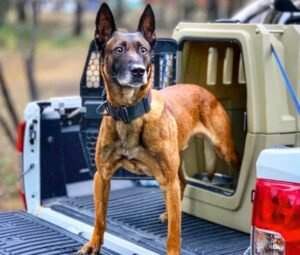
Training is not only about teaching commands. Effective dog training also helps reduce common behaviour problems such as excessive barking, leash pulling, jumping, anxiety, chewing, and destructive behaviour. Dogs that receive consistent training are more relaxed, responsive, and easier to manage at home and in public environments.
Learn more about puppy training and toilet training here: Puppy Toilet Training Guide Gold Coast.
Effective Dog Training Tips for Better Results
Using proven dog training methods such as positive reinforcement, consistency, engagement, and clear communication helps dogs learn faster and retain behaviours more effectively.
Consistency in Dog Training
Consistency is one of the most important parts of successful dog obedience training. Always use the same commands, reward system, and expectations so your dog clearly understands what behaviour is required.
For dogs struggling with recall or coming back when called, structured training is especially important. You can learn more about improving this skill here: dog recall training on the Gold Coast
Reward calm and correct behaviour immediately while redirecting unwanted behaviour in a controlled way. Consistent dog training creates faster learning and stronger long-term obedience.
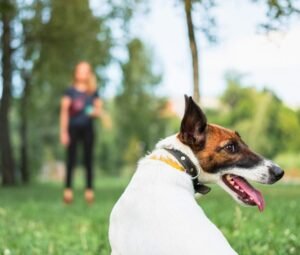
Short and Focused Training Sessions
Short and focused dog training sessions help puppies and adult dogs stay engaged, motivated, and responsive during learning. Dogs learn more effectively when training is structured, consistent, and easy to understand.
For puppy training, sessions should generally last around 5–10 minutes to maintain focus and prevent mental fatigue. Adult dog obedience training sessions can often continue for 10–15 minutes depending on the dog’s age, energy level, and training experience.
Teaching one behaviour or command at a time — such as sit, stay, recall, heel, or loose leash walking — improves communication and helps dogs retain information faster. Ending training sessions on a positive result also helps build confidence and encourages long-term learning success.
Reward-Based Dog Training: How Operant Conditioning Works
Operant conditioning is one of the most effective and scientifically supported methods used in modern dog training. It explains how a dog’s behaviour is shaped by consequences—either increasing or decreasing behaviours based on what happens immediately after the behaviour occurs.
Dogs naturally repeat behaviours that are rewarded and avoid behaviours that lead to unpleasant outcomes. Understanding operant conditioning allows dog owners to train more clearly, fairly, and consistently.
Operant conditioning consists of four quadrants, each playing a specific role in obedience training, puppy training, and behaviour modification.
Four Quadrants of Operant Conditioning
1. Positive Reinforcement (R+)
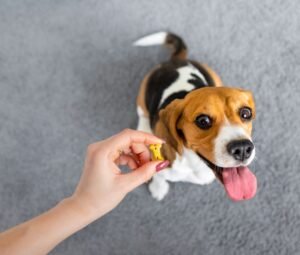
Positive reinforcement involves adding something the dog enjoys to increase a desired behavior.
Examples:
- Giving treats when your dog sits
- Praising your dog for calm leash walking
- Offering a toy for good behavior
This is the most recommended and widely used method in dog training. It builds confidence, strengthens the dog–owner bond, and produces long-lasting results.
2. Negative Reinforcement (R−)
Negative reinforcement means removing something unpleasant when the dog performs the correct behavior, which increases the likelihood the behavior will be repeated.
Examples:
- Releasing leash pressure when the dog stops pulling
- Removing mild pressure once the dog heels or sits
Negative reinforcement does not mean punishment. It teaches the dog how to turn off discomfort by choosing the correct behavior.
3. Positive Punishment (P+)
Positive punishment involves adding an unpleasant consequence to reduce unwanted behavior.
Examples:
- A firm verbal correction for jumping
- A brief leash correction for lunging
This quadrant should be used carefully and sparingly. Overuse or poor timing can lead to fear, stress, or confusion, especially in puppies or sensitive dogs.
4. Negative Punishment (P−)
Negative punishment involves removing something the dog wants to reduce unwanted behavior.
Examples:
- Withholding attention when a dog jumps
- Ending playtime when behavior becomes too rough
- Removing a toy if the dog ignores commands
This is a humane and effective way to teach impulse control and manners.
Basic Commands Every Dog Should Learn
Teaching basic obedience skills is an important foundation for both puppies and adult dogs. Skills such as sit, stay, come and leave it can improve communication, support safer everyday behaviour and provide a foundation for more advanced training.
For personalised support, explore our dog training services on the Gold Coast.
- Sit – Encourages calmness and self-control
- Stay – Teaches patience and impulse control
- Down – Promotes relaxed behavior
- Heel – Improves leash walking and focus
- Quiet – Helps control excessive barking
- Recall – A critical recall command for safety
- Free – Releases the dog from a command
Leash Training for Dogs
Leash training is essential for safety, control, and legal compliance. Every dog should learn to walk calmly on a leash without pulling.
Begin by introducing your dog to the leash and harness gradually. Avoid pulling or forcing. Teach loose-leash walking by rewarding calm behavior and stopping movement when the dog pulls.
Proper leash training prevents lunging, pulling, and reactive behavior, making walks safer and more enjoyable.
Nutrition and Feeding During Dog Training:
Proper nutrition supports learning, energy levels, and overall health.

For Adult Dogs:
- Provide a balanced diet with proteins, vitamins, and minerals
- Use healthy treats as training rewards
- Ensure fresh water is always available
For Puppies:
- Feed high-quality puppy food to support growth
- Use small, soft treats for training
- Avoid heavy meals before training sessions
House Training and Dog Urination Problems
House training requires patience, consistency, and a routine. Both puppies and adult dogs may experience accidents during the learning process.
Some dogs urinate due to excitement or nervousness, which does not always indicate poor toilet training. Establish a consistent bathroom schedule, supervise closely, and reward correct elimination to reinforce success. With patience and positive reinforcement, effective dog toilet training addresses these behavioural responses while building your dog’s confidence.