
Anxious Rescue Dog Training Gold Coast can help rescue dogs that struggle with fear, nervousness, uncertainty or difficult past experiences learn to feel safer and more confident in everyday situations.
You brought home a dog who needed someone. Three weeks later, he’s barking at the fence, panicking when you pick up your keys, and flattening himself on the footpath whenever a skateboard passes. These behaviours can be signs that your rescue dog is feeling overwhelmed rather than simply being disobedient.
At Master Of Puppies, we understand that rescue dogs can need time, structure and individualised support as they adjust to a new environment. Our Gold Coast dog trainers use reward-based training, confidence-building exercises and personalised behaviour training to help anxious, fearful and reactive dogs develop calmer responses and more reliable everyday behaviours.
The first step isn’t always teaching more commands. It’s understanding why your dog is struggling, identifying their triggers and creating situations where they can learn without becoming overwhelmed.
Quick Answer: Anxious rescue dog training on the Gold Coast works best when safety, routine and confidence come before demanding obedience. Give your dog time to settle into their new environment, establish predictable daily routines, reward calm behaviour and gradually introduce distractions while keeping them below their stress threshold. Every rescue dog is different, so the pace of progress depends on their history, temperament, environment and individual behaviour needs.
For Gold Coast owners, training may also need to account for local challenges such as busy footpaths, unfamiliar dogs, off-lead areas, traffic, apartment living, storms, fireworks and other environmental triggers.
This guide explains how to help an anxious rescue dog settle in, recognise early stress signals, build confidence, manage fear and reactivity, and introduce practical training exercises without overwhelming your dog.
Key Takeaways
Safety and predictability come first. A newly adopted rescue dog may need time to understand their new surroundings and daily routine before formal training becomes the priority.
Look beyond the behaviour. Barking, hiding, freezing, pulling away, lunging or avoiding people and dogs can have different causes, including fear, stress, frustration or uncertainty.
Learn your dog’s stress signals. Lip licking, yawning, turning away, freezing, whale eye, tucked posture and changes in body language can appear before more obvious reactions.
Build confidence gradually. Short, successful training sessions and controlled exposure can help a nervous dog learn that unfamiliar situations are manageable.
Don’t punish fear or warning signals. Punishing a growl, bark or avoidance response can suppress communication without addressing the reason for the behaviour.
Manage the environment. Reducing unnecessary triggers while your dog is learning can make training more effective and give them opportunities to practise calm behaviour.
Choose training based on the individual dog. An anxious rescue dog, fearful puppy and reactive adult dog may need different training strategies and levels of support.
Gold Coast conditions can affect behaviour. Storms, fireworks, heat, busy public areas and encounters with unfamiliar dogs can all be relevant when planning training and behaviour management.
Why Rescue Dogs on the Gold Coast Struggle With Anxiety
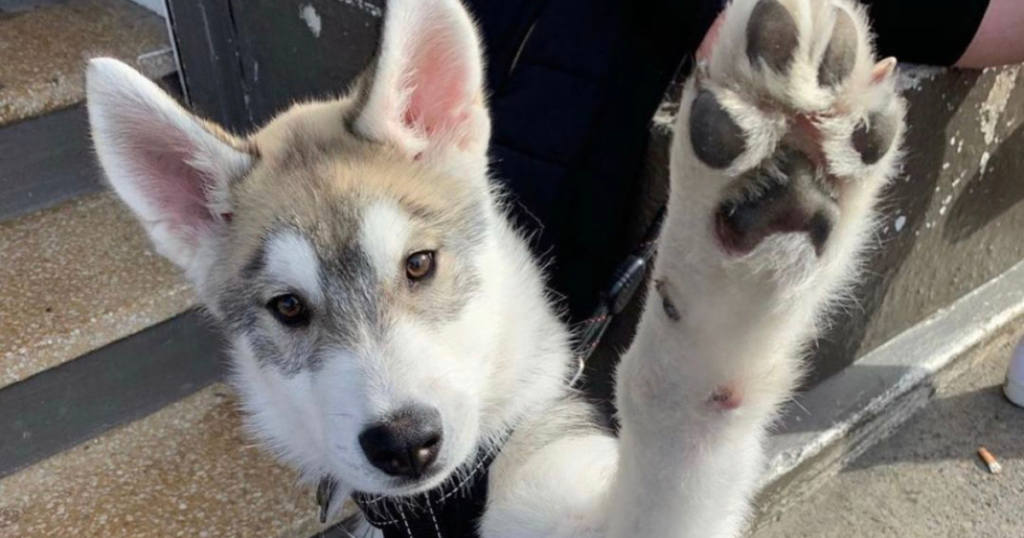
You did a wonderful thing — you brought home a dog who needed someone. Then reality hit. He panics when you pick up your keys. She flattens when a skateboard passes on the Broadwater path. He barks at the neighbour’s Kelpie for ten minutes straight.
Your dog isn’t being difficult. Your dog is being honest.
Rescue dogs arrive carrying a history you can’t read — kennel stress, a missed socialisation window (3–16 weeks), a previous home where communication broke down, or genuine trauma. Add the Gold Coast itself: off-lead beaches, packed coastal paths, e-bikes, storms, fireworks and dog-friendly cafés everywhere. For a confident dog it’s paradise. For an anxious rescue it’s sensory overload.
The good news? Anxiety isn’t a personality trait. It’s a state — and states change. With the right approach, and where needed professional dog training on the Gold Coast, the dog who flinches at everything today can become the dog who sleeps through a storm.
Anxiety, Fear or Reactivity? Get the Diagnosis Right
You can’t fix a problem you’ve misidentified.
| What you see | What it usually is | What it needs |
| Trembling, hiding, refusing food | Generalised anxiety / shutdown | Decompression, routine, zero pressure |
| Barking and lunging on lead only | Leash reactivity | Distance, counter-conditioning, pattern games |
| Freezing or growling at one thing | Specific fear | Desensitisation below threshold |
| Howling, destruction — only when alone | Separation anxiety | Graduated alone-time protocol |
| Jumping, spinning, can’t settle | Over-arousal (often mistaken for anxiety) | Impulse control, sleep audit, rest |
One dog can have three of these at once — which is why a proper assessment beats guessing from YouTube. We start every one-on-one private training session by working out what’s actually driving the behaviour.
Trainer’s note: The most common Gold Coast mistake is treating an under-slept, over-stimulated dog as “anxious” and adding more exercise. Usually the fix is more rest, not more input.
Reading Your Dog’s Stress Signals
Early (create distance now): lip licking with no food present, yawning when not tired, head turning, whale eye, shaking off when dry.
Middle (leave the situation): tucked tail, pinned ears, frozen body, refusing food they’d normally take, pacing or hiding behind you.
Late (out of options): growling, snapping, lunging, redirecting onto the lead.
Never punish a growl. A growl is a warning system. Suppress it and you get a dog who bites without one. That’s the most important line in this guide.
The First 90 Days: The 3-3-3 Rule
First 3 days — overwhelm. Survival mode. Refusing food, hiding, sleeping constantly. Some dogs seem “perfect” — that’s usually shutdown, not calm. Do almost nothing: one quiet room, a covered crate, predictable feeding, short toilet breaks. No visitors, no dog parks, no cafés.
First 3 weeks — settling. Here’s what nobody warns you about: behaviour often gets worse around weeks 2–4. As your dog relaxes enough to have opinions, guarding, barking and separation distress can appear. This isn’t regression — it’s your real dog arriving. Start gentle foundations: hand feeding, name response, a settle mat, tiny alone-time reps.
First 3 months — trust. Confidence builds and structured training compounds. Now you add loose lead walking, recall, and planned exposure to Gold Coast life at a distance your dog can handle.
| Timeframe | What’s normal | Focus on |
| Days 1–3 | Hiding, not eating, sleeping 18+ hrs | Rest and routine |
| Week 1–2 | Following you everywhere | Hand feeding, name game |
| Week 3–4 | New behaviours appear | Foundations, alone-time practice |
| Month 2–3 | Real personality emerges | Loose lead, counter-conditioning |
| Month 6–12 | Confidence consolidates | Maintenance, real-world freedom |
Setting Up Your Home
Environment does about half the work.
- A den, not a cage — covered crate or bed in a quiet corner, door open, never for punishment
- Baby gates so your dog can retreat without confrontation
- A predictable schedule — same wake, feed, walk and rest windows daily
- Sleep audit — 14–18 hours. Chronic under-sleeping looks exactly like anxiety
- A long line (5–10m) for safe sniffing without off-lead risk
- Y-front harness + QLD registration tag, and double-clip your lead for the first month
- Microchip details updated the day you adopt — anxious dogs are flight risks
- High-value food — roast chicken, cheese, sardines. Kibble won’t cut it
5 Core Exercises for an Anxious Rescue Dog
1. Hand feeding and the name game. Feed one meal a day by hand for two weeks. Say the name once; the instant they look, mark and feed. Builds value in checking in and quietly prevents guarding.
2. The settle mat. Toss a treat on the mat, feed 3–4 more slowly, say nothing, release with a word. Build to ten calm minutes. You’re not training a position — you’re training a state.
3. Decompression sniff walks. Swap one structured walk a week for a long-line sniff session somewhere quiet. Twenty minutes of sniffing does more for the nervous system than an hour of heeling.
4. Counter-conditioning. Find the distance where your dog notices a trigger but can still eat. Trigger appears → food flows. Trigger leaves → food stops. Repeat until your dog looks at you when the trigger appears. Reduce distance only when the current step is easy three sessions running. Never flood — dragging a terrified dog closer builds shutdown, then bites.
5. Graduated alone time. Step behind a door for 3 seconds. Return calmly, no fuss. Build to 10, 30, 60 seconds — always returning before your dog worries. Decouple departure cues: pick up your keys, then sit down.
Separation Anxiety Training
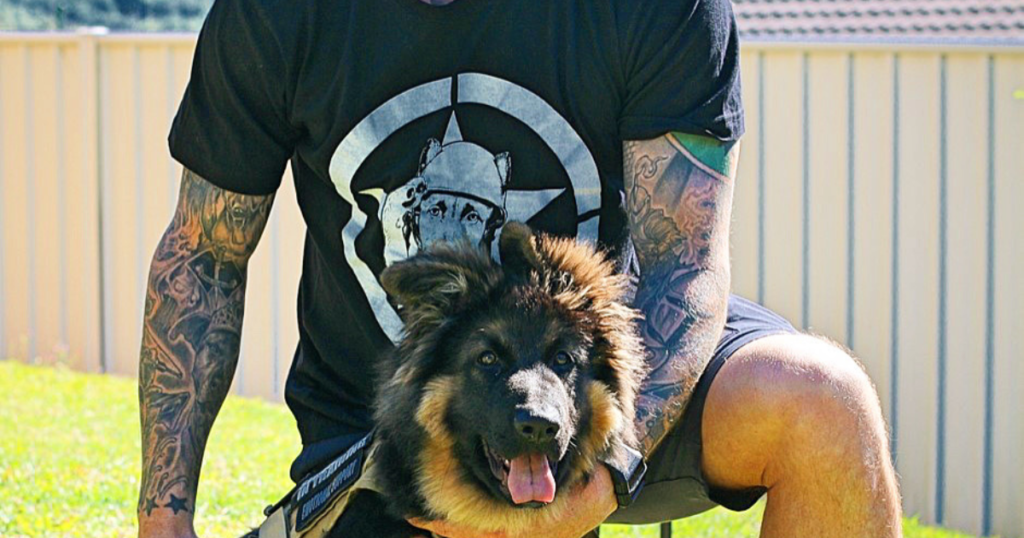
True separation anxiety is panic: howling, drooling, destroying doorframes (not random items), toileting despite being house-trained, refusing food. It usually starts within 15–30 minutes.
What helps: a camera (you can’t train what you can’t see), absences kept below threshold (if your dog copes with 90 seconds, work at 60), and structured daycare so your dog is never alone longer than they can handle. Our Gold Coast doggy daycare is built around supervised structure and rest, not a free-for-all play pen — which matters enormously for an anxious dog.
For apartments in Southport, Surfers Paradise or Broadbeach, add white noise and move the bed away from the front door.
Reactive Rescue Dogs: When Fear Looks Like Aggression
Most leash reactivity is fear plus frustration, not aggression. The lead removes your dog’s ability to move away, so they use the only tool left — noise.
Manage first (change your route and walk time), work at distance, build a U-turn cue, and reward the look-and-return. Skip dog parks entirely. If barking and lunging is your main battle, our guide to reactive dog training on the Gold Coast breaks it down step by step.
Gold Coast-Specific Challenges
Storm season (Nov–Mar). Dogs panic hours before you hear thunder. Use a dark interior room, white noise and a snug wrap — and do not withhold comfort. You cannot reinforce fear with kindness. Do sound desensitisation in the off season.
Fireworks and events. New Year’s over the Broadwater, Schoolies, festivals. Secure the yard and check the microchip.
Off-lead beaches. Currumbin Alley and the Broadwater are wonderful — for confident dogs. Being rushed by three loose dogs can undo months of work in ninety seconds. Earn the beach, don’t start there.
Heat. Stress panting and heat panting compound. Train early morning or after 6pm. A heat-stressed dog cannot learn.
We work across Molendinar, Southport, Nerang, Robina, Burleigh Heads, Broadbeach, Helensvale, Coomera, Ormeau and more — the full list is on our service areas page. We also run dog training at Gleneagle, which is one of the best decompression environments in South East Queensland for a dog who finds suburban life relentless.
6 Mistakes That Keep Anxious Rescue Dogs Stuck
- 1. Flooding. “He’ll get used to it” is not a training plan. Forcing a terrified dog to stay near what scares them doesn’t build tolerance — it builds shutdown, and eventually bites. Instead: work at the distance where your dog can still eat, and shrink it slowly.
- 2. Forced socialisation. Dog parks, cafés and meet-the-family in week one. Every bad greeting teaches your dog that other dogs mean trouble. Instead: parallel walks at 20 metres with one calm, known dog.
- 3. Punishing the growl. You’re deleting the warning label, not the problem. A dog who’s been told off for growling learns to skip straight to the snap. Instead: thank the growl, create space, and address what caused it.
- 4. Too much freedom too fast. Full house access on day two overwhelms most rescues and rehearses habits you’ll spend months undoing. Instead: one room, baby gates, and earn space gradually.
- 5. Over-exercising instead of resting. An exhausted dog is wired, not calm. Chronic under-sleeping looks identical to anxiety, and most owners respond by adding another walk. Instead: enforce naps — 14–18 hours, in a covered crate or quiet room.
- 6. Waiting too long to get help. Behaviour rehearsed daily for six months takes far longer to change than behaviour caught in week three. Instead: get an assessment as soon as a pattern appears, not once you’re desperate.
Choosing the Right Program
| Program | Best for | Watch out for |
| Private training | Fear, anxiety, reactivity, separation distress | Needs consistent owner follow-through |
| Board & train | Dogs needing intensive daily structure | Must be welfare-focused for an anxious dog |
| Structured daycare | Confidence, breaking up long absences | Free-for-all daycare can worsen anxiety |
| Group classes | Confident, mildly nervous dogs | Usually too much, too soon for a fearful rescue |
| Farm programs | Overwhelmed, over-stimulated city dogs | Needs a planned transition home |
Should you send an anxious rescue to board and train? It depends on the dog and the facility. For a shut-down rescue in week one, no. For a decompressed dog who needs daily repetition a busy family can’t deliver, it can be transformative. Ask any provider: How much rest does my dog get? What happens when my dog is stressed? How do you hand the training back to me? If they can’t answer clearly, walk away — you can see exactly how ours runs on our board and train program page.
Heading away and dreading a kennel? Farm stay boarding is usually far kinder — space, routine and human contact instead of a concrete run.
Realistic Timelines
| Behaviour | First improvement | Strong resolution |
| Decompression / settling | 1–3 weeks | 3 months |
| Basic obedience | 2–4 weeks | 8–12 weeks |
| Leash reactivity | 3–6 weeks | 3–6 months |
| Separation anxiety | 2–4 weeks | 3–9 months |
| Noise phobia | Off-season work | 1–2 seasons |
Anyone promising to “fix” a genuinely anxious rescue in one session is selling suppression, not training.
See your vet if there’s sudden behaviour change, reluctance to be touched, panic that hasn’t shifted after 6–8 weeks, or any bite that breaks skin. Undiagnosed pain drives a surprising number of “anxious” dogs, and medication can lower the baseline enough for training to work. It isn’t a failure — it’s a bridge.
For free practical help while you work through this, we keep a library of dog training resources for Gold Coast owners.
Why Gold Coast Owners Choose Master Of Puppies
- Veteran-led expertise. Every trainer has been trained by — or is — a former Australian Special Forces military working dog handler
- Reward-based and results-driven. Positive reinforcement with clear structure.
- Tailored programs. A shut-down Greyhound and a frustrated Kelpie cross need completely different plans.
- Two environments. Our Molendinar conditioning centre, plus farm daycare at Gleneagle for dogs who need space and water.
- 300+ five-star Google reviews.
Most adult and adolescent rescues start with our Doggy Bootcamp for 6 months and over. Adopted a young rescue under 20 weeks? Puppy training is the better starting point. Not sure which fits — browse all our programs and we’ll tell you honestly.
Frequently Asked Questions
How long does it take to train an anxious rescue dog on the Gold Coast?
There is no fixed timeline for anxious rescue dog training because progress depends on the dog’s history, temperament, triggers, environment and consistency of training. Some dogs may show early changes within several weeks, while others need longer-term behaviour support. The first stage should focus on helping your rescue dog settle, establishing a predictable routine, building trust and gradually introducing training at a level they can manage.
What is the 3-3-3 rule for rescue dogs?
The 3-3-3 rule is a general guideline describing how some rescue dogs may adjust after adoption: roughly 3 days to decompress, 3 weeks to become more familiar with their routine and around 3 months to feel more settled. It is not a scientific timetable or a rule that applies to every dog. Some rescue dogs adjust faster, while dogs with significant fear or previous negative experiences may need considerably more time and support.
Is my rescue dog anxious or just settling in?
Some nervousness, hiding or uncertainty can be normal while a newly adopted dog adjusts to a new environment. However, persistent or intense behaviours such as panic, trembling, destructive behaviour, excessive barking, avoidance or refusing food may indicate that your dog needs additional support. A professional assessment can help identify whether the behaviour is related to fear, anxiety, stress, frustration or another underlying issue.
For information about dog behaviour and welfare, the RSPCA Knowledgebase provides additional resources. If you are concerned about your dog’s health, appetite or wellbeing, speak with your veterinarian.
Should I take an anxious rescue dog to a dog park?
An anxious rescue dog does not necessarily need a dog park, particularly during the early adjustment period. Busy parks and uncontrolled interactions can expose a fearful or reactive dog to more stimulation than they can comfortably handle. Calm walks, distance from triggers, controlled interactions and structured socialisation can provide more manageable opportunities to build confidence.
Will medication help an anxious dog?
Medication may be appropriate for some dogs experiencing significant anxiety, but this decision should be made with a veterinarian. Veterinary treatment can sometimes support a behaviour modification plan by helping a dog remain calm enough to learn, but medication is not a substitute for appropriate behaviour training and environmental management.
Is board and train suitable for a fearful rescue dog?
Board and Train may be suitable for some rescue dogs, but the individual dog’s temperament, triggers and ability to cope away from their owner should be considered first. Ask the provider how they handle fearful or reactive dogs, what training methods are used, how much rest is provided and how owners are taught to maintain the training after the dog returns home.
My rescue dog is scared of men. What should I do?
Do not force your rescue dog to interact with men. Ask visitors to give the dog space, avoid reaching towards them and allow the dog to choose whether to approach. Pairing the presence of a person with high-value food can help create a more positive association, provided the dog remains comfortable and is not pressured to move closer.
Can older rescue dogs still be trained?
Yes. Older rescue dogs can learn new behaviours and develop greater confidence with appropriate training and consistent practice. Training should be adjusted to the dog’s age, physical ability, learning history and individual behaviour needs.
How much does dog training cost on the Gold Coast?
Dog training costs on the Gold Coast vary depending on the type of training and support required. Options can include private dog training, puppy training, Board & Train and structured daycare. Visit our dog training rates for current pricing and program information.
Conclusion
The dog hiding behind your couch today can gradually become much more comfortable walking past everyday distractions, meeting people appropriately and settling in familiar environments. The timeline will be different for every rescue dog, but the underlying approach remains the same: create safety, reduce unnecessary stress and teach new behaviours gradually.
Lasting progress involves more than simply giving a rescue dog affection. It comes from decompression before demands, structure before freedom and consistently reinforcing calm behaviour. With appropriate rescue dog training, dogs can learn to manage everyday triggers, develop confidence and respond more reliably in different environments.
You don’t need to become a professional dog trainer. You need a clear plan based on your dog’s behaviour, triggers and current level of confidence.
Explore our dog training services on the Gold Coast to see which training option may suit your dog.
Your rescue dog took a chance on you. Give them the time, structure and support they need to feel safe.
Ready to Help Your Rescue Dog Feel Safe Again?
You’ve read the plan. The next step is understanding where your dog currently sits and what type of training support is appropriate.
Book a behaviour assessment with Master Of Puppies. We’ll assess your dog’s history, triggers, stress signals and current behaviour, then recommend a practical training pathway based on their individual needs.
What happens next:
Tell us about your dog — their history, triggers, behaviour and what you’ve already tried.
Complete an in-person assessment — we’ll look at the behaviour and identify the factors that may be contributing to it.
Get a practical training pathway — depending on your dog’s needs, this may include private dog training, Bootcamp or structured farm-based support.
Gold Coast: 60 Export Drive, Molendinar QLD 4214
Farm: 118–126 Veresdale Scrub Rd, Gleneagle QLD 4285
0478 111 667
info@masterofpuppies.com.au
👉 Book online — choose your location and request a training session
👉 Send an enquiry — tell us about your dog’s behaviour and training needs
Veteran-led. Reward-based. 300+ five-star reviews. Servicing the Gold Coast and South East Queensland.