
Stop dog pulling on lead by teaching your dog that staying close to you is more rewarding than pulling ahead. Using positive reinforcement, consistent training, and the right walking techniques, most dogs can learn loose lead walking and enjoy calmer, safer, and more enjoyable walks.
If every walk feels like a struggle because your dog pulls towards people, other dogs, exciting smells, or anything that catches their attention, you’re not alone. Lead pulling is one of the most common challenges faced by dog owners. The good news is that it’s a learned behaviour, which means it can be changed with patience, consistency, and reward-based training.
A dog that constantly pulls on the lead doesn’t just make walks frustrating—it can also increase the risk of injury, reduce your dog’s focus, and make daily exercise stressful for both you and your dog. Whether you’re training a young puppy or an adult dog, teaching loose lead walking helps build better communication, improves safety, and makes every walk more enjoyable.
Many owners assume their dog is being stubborn or deliberately ignoring them. In reality, most dogs pull because they’ve learned that pulling gets them where they want to go, or because they’re excited, curious, or distracted by their surroundings. Understanding why your dog pulls is the first step towards changing the behaviour and achieving long-term success.
At Master Of Puppies, we’ve helped dog owners across the Gold Coast develop better walking habits through structured, positive reinforcement training. Our trainers focus on practical techniques that strengthen the bond between you and your dog while building reliable lead manners in real-world environments.
In this guide, you’ll learn why dogs pull on the lead, how to stop dog pulling on lead using proven, reward-based methods, the most common training mistakes to avoid, and when professional dog training may help you achieve faster, long-lasting results.
Our Experience Helping Dogs Walk Calmly on Lead
Many puppies and adult dogs can overcome lead walking challenges, from mild pulling to strong, persistent pulling around people, other dogs, and everyday distractions. Although every dog learns at a different pace, the most reliable results come from clear communication, structured, reward-based training, and consistent practice. With patience and the right guidance, dogs can develop better focus, improved lead manners, and calm, confident walking behaviour in a variety of environments.
Rather than relying on equipment alone, our training focuses on teaching dogs the skills they need to stay calm, engaged, and responsive during walks. By addressing the reason behind the pulling and reinforcing the behaviours you want to see, dogs can develop the confidence and self-control needed for relaxed, enjoyable walks in real-world environments.
Why Dogs Pull on the Lead (And How to Stop Dog Pulling on Lead)

To improve lead pulling, we first need to understand why it happens.
Dogs are not born understanding lead manners. From a dog’s perspective, the outside world is exciting, stimulating and full of opportunities to investigate, explore and interact with their environment. For more insight into this behaviour, you can read this guide on why dogs pull on the lead and how to fix it.
In most cases, lead pulling develops through a combination of excitement, environmental stimulation and learned behaviour.
Understanding this is the first step towards creating calmer, more controlled walks.
1. The Outside World Is Highly Stimulating
To your dog, every walk is an information-gathering exercise.
Outside, your dog is exposed to:
- Smells
- Sounds
- Movement
- Other dogs
- People
- Animals
- Traffic
- New environments
Their brain is constantly processing information through their nose, eyes and ears, which naturally encourages them to move towards things that interest them.
For many dogs, walking is not just exercise. It is also mental stimulation and exploration.
2. Pulling Gets Accidentally Rewarded
This is one of the biggest reasons lead pulling continues.
When a dog pulls forward and successfully reaches something they want, such as:
- A smell on the ground
- A park or open space
- Another dog
- A person
- A distraction
- A doorway or gate
They learn a simple lesson:
Pulling works.
Over time, this reinforces the behaviour and makes it stronger. The dog is not trying to be difficult. They have simply learned that tension on the lead often gets them where they want to go.
Alongside consistent training, providing regular physical exercise, mental enrichment, and appropriate social interaction can help support better behaviour. Our Doggy Daycare Gold Coast HQ offers a structured environment where dogs can stay active, engaged, and mentally stimulated between training sessions.
3. Lack of Structured Lead Training
Most dogs are never formally taught how to walk on a loose lead.
Instead, they are attached to a lead and expected to work it out for themselves in highly distracting environments.
Without clear guidance, dogs naturally default to behaviours that are rewarding, which is usually moving forward at their own pace and investigating whatever interests them.
This is why structured training is essential if you want long-term improvement in lead manners.
4. Inconsistent Expectations
Many owners unintentionally allow pulling sometimes while correcting it at other times.
For example, pulling may be allowed when the owner is in a hurry but discouraged during dedicated training walks.
This inconsistency makes it difficult for the dog to understand what is expected and often slows progress.
Key Takeaway
Lead pulling is rarely caused by a stubborn or “bad” dog.
In most cases, it is a combination of environmental stimulation, learned reinforcement, lack of training and inconsistent expectations.
Once you understand why the behaviour occurs, you can begin applying the right training, structure and consistency to create calmer, more enjoyable walks.
Common Mistakes When Trying to Stop Dog Pulling on Lead
Many dog owners unintentionally reinforce lead pulling without even realising it. Small handling mistakes can strengthen the behaviour over time and slow down progress, even when owners are genuinely trying to improve their dog’s walking.
Understanding what not to do is just as important as understanding what to do.
1. Pulling Back on the Lead
One of the most common reactions when a dog pulls is for the owner to pull back.
Unfortunately, this often creates a tug-of-war. As tension increases on the lead, many dogs become more focused on getting where they want to go rather than paying attention to their handler.
Building better focus and control through training, such as our dog recall training in Gold Coast, can significantly improve engagement and responsiveness during walks.
Instead of teaching calm walking, it often creates frustration for both the dog and the owner.
The goal is not to win a pulling contest. The goal is to teach the dog what is expected and help them make better decisions.
2. Being Inconsistent
Dogs learn through repetition and consistency.
If pulling is allowed sometimes but corrected at other times, your dog receives mixed messages. For example, many owners allow pulling when they are in a hurry but try to enforce loose lead walking when they have more time.
From the dog’s perspective, the rules keep changing.
Clear and consistent expectations generally produce faster and more reliable results.
3. Relying on Equipment to Fix the Problem
Many owners spend months trying different harnesses, collars and leads hoping they will solve the issue.
While the right equipment can certainly help with management and safety, no piece of equipment teaches loose lead walking on its own.
Training creates behaviour. Equipment simply supports the process.
4. Continuing to Walk While the Lead Is Tight
This is one of the biggest mistakes we see.
If your dog pulls and continues moving towards what they want, they are effectively being rewarded for pulling.
Whether they are heading towards another dog, a smell, a park or simply moving forward, they are learning a simple lesson:
Pulling works.
If pulling consistently gets them where they want to go, they have little reason to change their behaviour.
5. Expecting Instant Results
Loose lead walking is a skill, just like recall, place training or any other obedience exercise.
Many owners expect dramatic improvement after a single walk or training session. While some dogs improve quickly, most require:
- Repetition
- Consistency
- Clear communication
- Practice around distractions
Like any skill, improvement happens over time through regular practice and reinforcement.
Key Takeaway
Most lead pulling problems are not caused by stubborn dogs.
They are usually the result of inconsistent expectations, accidental reinforcement, and a lack of structured training. These challenges can affect dogs of all ages and backgrounds, including newly adopted dogs that may need extra guidance and confidence-building. If you’ve recently adopted a dog, our rescue dog behaviour training services can help address lead pulling and other common behavioural issues using a structured, positive approach.
Once these common mistakes are corrected, training becomes significantly easier and far more effective.
Common Lead Walking Myths
Many dog owners receive misleading advice about lead walking. Let’s clear up a few common myths.
Myth 1: “My dog is stubborn”
Dogs are not stubborn — they repeat behaviours that get rewarded. Pulling simply works for them.
Myth 2: “A short lead stops pulling”
A short lead may control movement, but it does not teach loose lead walking.
Myth 3: “More exercise will fix it”
Exercise helps energy levels, but pulling is a training issue, not an exercise issue.
Myth 4: “Equipment will fix the problem”
Tools can help manage behaviour, but training is what creates lasting change.
Key Takeaway
Loose lead walking comes from consistent training, clear communication, and practice — not shortcuts.
Quick Comparison: Common Mistakes vs Better Approaches
| Common Mistake | Better Approach |
|---|---|
| Pulling back on the lead | Stop moving, regain your dog’s attention, and continue only when the lead is loose. |
| Walking while the lead is tight | Reward calm, loose lead walking before moving forward. |
| Relying only on equipment | Use suitable equipment to support training, but focus on teaching the behaviour you want. |
| Training only occasionally | Practise loose lead walking consistently during every walk. |
| Starting in busy environments | Begin training in quiet, low-distraction areas before progressing to more challenging locations. |
| Expecting instant results | Be patient and consistent, as loose lead walking develops through regular practice and repetition. |
How to Stop Your Dog’s Lead Pulling (Step-by-Step Training)
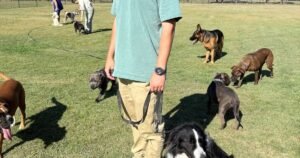
To stop dog pulling on the lead, start training in a low-distraction environment, prevent pulling from being rewarded, and gradually introduce real-world distractions while maintaining consistency. If your dog also has excess energy or would benefit from more structured exercise and social interaction, read our guide on whether Doggy Daycare is good for dogs to learn how a well-managed daycare program can support your dog’s overall behaviour and wellbeing.
Step 1: Start in a Low-Distraction Environment
Begin training where your dog can succeed, such as your home, backyard, or a quiet street.
Focus on teaching calm behaviour on the lead before adding distance or distractions.
Step 2: Use the Right Equipment
Equipment supports training but does not replace it.
Recommended:
- Well-fitted slip lead or training collar
- Fixed 1.2–1.8m lead
Avoid retractable leads as they create constant tension and make training harder.
Step 3: Build Engagement
Your dog must learn that paying attention to you is rewarding.
Encourage:
- Checking in with you
- Calm walking beside you
- Focus around distractions
Engaged dogs are easier to control in real environments.
Step 4: Stop Rewarding Pulling
Pulling continues because it works.
If your dog pulls:
- Stop forward movement
- Regain attention
- Continue only when the lead is loose
This teaches that calm behaviour moves them forward.
Step 5: Introduce Real-World Distractions
Gradually increase difficulty using:
- Parks
- People
- Other dogs
- Busy streets
This builds real-life walking reliability, not just home training.
Step 6: Be Consistent
Consistency is key to success.
If pulling is sometimes allowed, dogs become confused and progress slows.
Every walk should reinforce the same rules.
The clearer and more consistent your expectations are, the easier it becomes for your dog to understand what is required.
Key Takeaway
Loose lead walking is not a quick fix. It is a skill that must be taught, practised and maintained.
When dogs understand what is expected, remain engaged with their handler and receive consistent guidance, lead pulling becomes significantly easier to improve. If your dog also struggles with attention and focus, you may find our dog barking training tips helpful for improving engagement and responsiveness.
The goal is not simply a loose lead. The goal is a calm, focused dog that understands how to move through the world with you.
Advanced Lead Walking Tips
Once your dog understands the basics of loose lead walking, you can begin building reliability around greater levels of distraction.
The goal is not simply teaching your dog to walk nicely in a quiet street. The goal is teaching them to remain engaged with you regardless of what is happening around them.
Start the Walk Calmly
One of the biggest mistakes owners make is allowing excitement before the walk has even begun.
Dogs that are barking, spinning, jumping or rushing the door before the walk starts will often be more likely to pull once outside.
Before putting the lead on, encourage calm behaviour such as:
- Standing calmly
- Remaining still while the lead is attached
- Waiting patiently at doorways
- Offering attention to the handler
Starting the walk calmly often helps create a calmer mindset throughout the walk.
Use the Environment as a Reward
For many dogs, access to the environment can be highly rewarding.
Many dogs value access to smells, movement, people and other dogs just as much, or sometimes more, than food rewards.
Use this to your advantage.
Allow your dog to access rewarding parts of the environment when they are walking calmly and making good decisions. If they pull towards something, regain engagement before allowing them to move forward.
This teaches the dog that self-control and engagement create opportunities, while pulling does not.
Train Around Real-World Distractions
Many dogs can walk beautifully in the backyard but struggle the moment they see another dog, person or distraction.
As your dog’s skills improve, gradually introduce more challenging environments such as:
- Parks
- Busy footpaths
- Sporting fields
- Shopping precincts
- Outdoor cafes
- Areas with other dogs present
This is where real-world reliability is developed.
Don’t Walk on Autopilot
Many owners walk the same route every day with very little interaction between themselves and their dog.
Instead, look for opportunities to engage your dog throughout the walk by:
- Changing direction
- Asking for simple obedience exercises
- Reinforcing engagement
- Encouraging attention around distractions
The more involved your dog is with you, the easier it becomes to maintain focus in challenging environments.
Real-Life Management Tips
While training creates long-term behaviour change, good management helps prevent setbacks while your dog is still learning.
Choose Suitable Training Environments
Set your dog up for success.
If your dog struggles around distractions, avoid overwhelming environments initially.
Start in:
- Quiet streets
- Familiar locations
- Open spaces
- Low-traffic areas
As your dog’s skills improve, gradually increase the level of difficulty.
Train During Quieter Times
Busy environments create additional challenges.
If your dog is still learning, training during quieter periods can help them remain focused and successful.
Early mornings, quieter weekdays and lower-traffic times often provide better training opportunities. For dogs with more serious behaviour issues, our aggressive dog training in Gold Coast provides structured support and guidance.
Meet Your Dog’s Physical and Mental Needs
Training is generally easier when your dog’s physical and mental needs are being met appropriately.
Appropriate exercise, training, environmental exposure and enrichment can all contribute to a calmer and more engaged dog.
However, it is important to remember that exercise alone does not teach loose lead walking. Many highly exercised dogs still pull because they have never been taught what is expected of them.
Training and exercise work best when combined.
When to Seek Professional Help
Some dogs improve with consistent home training, but others need professional support when behaviours become unsafe or difficult to manage.
You may need a professional dog trainer if your dog:
- Pulls so strongly that walks feel unsafe
- Becomes reactive towards dogs, people, or vehicles
- Lunges, barks, or growls on the lead
- Struggles to focus around distractions
- Causes anxiety or loss of confidence during walks
- Shows little improvement despite consistent training
These behaviours often become harder to fix over time without structured guidance.
What Professional Training Can Help With
A qualified trainer can provide:
- Clear handling techniques
- Structured step-by-step training plan
- Improved control and safety
- Tailored guidance for your dog’s behaviour
- Faster and more consistent progress
Frequently Asked Questions
How long does it take to stop dog pulling on the lead?
Most dogs show noticeable improvement within 2 to 6 weeks of consistent, reward-based training, although every dog learns at its own pace. Factors such as age, breed, previous walking habits, excitement levels, and training consistency all influence progress. Short, frequent sessions combined with regular practice usually produce the most reliable long-term results.
What is the fastest way to stop dog pulling on the lead?
The fastest way to stop dog pulling on the lead is to reward loose lead walking, stop moving whenever the lead becomes tight, and stay consistent on every walk. Dogs learn more quickly when pulling never allows them to move forward and calm walking is immediately rewarded with praise, treats, or access to what they want.
What is the best lead or harness for a dog that pulls?
A well-fitted front-clip harness or flat collar can improve comfort and handling, but no piece of equipment will permanently stop a dog pulling on the lead without training. Long-term success comes from combining appropriate equipment with positive reinforcement and structured loose lead walking exercises.
Why does my dog pull more in busy environments?
Dogs often pull more in busy environments because exciting smells, people, traffic, wildlife, and other dogs increase their arousal levels. As distractions increase, maintaining focus becomes more difficult. Start training in quiet locations and gradually introduce more challenging environments as your dog’s confidence and self-control improve.
Why does my dog pull even after training?
Dogs may return to pulling if training hasn’t been fully generalised across different environments or if the behaviour has been unintentionally rewarded over time. Consistent reinforcement, regular practice, and gradually increasing distractions help create reliable loose lead walking in real-world situations.
How do I stop dog pulling on the lead?
To stop dog pulling on the lead, reward your dog whenever the lead remains loose, stop walking as soon as the lead tightens, and only continue once your dog returns to your side. Consistency is essential. Every successful walk reinforces calm behaviour and teaches your dog that staying close is more rewarding than pulling ahead.
Can older dogs learn loose lead walking?
Yes. Dogs of all ages can learn loose lead walking. While older dogs may have stronger habits, they are fully capable of developing better walking behaviour through clear communication, positive reinforcement, and consistent training.
Should I use corrections or punishment to stop pulling?
Modern dog training recommends teaching the behaviour you want rather than relying on punishment. Rewarding calm walking, preventing pulling from being successful, and maintaining clear, consistent expectations generally produce more reliable and lasting results than harsh corrections.
Is pulling on the lead normal?
Yes. Pulling is a natural behaviour because dogs move faster than humans and are motivated to investigate their surroundings. Without guidance, many dogs quickly learn that pulling helps them reach interesting places. With structured training, most dogs can learn to walk calmly on a loose lead.
When should I seek professional dog training?
If your dog continues pulling despite consistent training, reacts strongly to people or other dogs, or walking has become stressful or unsafe, professional guidance can help identify the underlying cause and create a personalised training plan that supports long-term success.
Conclusion
Lead pulling is one of the most common training challenges dog owners face when trying to stop dog pulling on lead during everyday walks.
In most cases, it happens because the dog has never been clearly taught what is expected on the lead. Our structured training approach at Master Of Puppies focuses on building calm, reliable loose lead walking through clear communication and consistency.
Once your dog understands what’s expected, remains focused during walks, and receives consistent, reward-based training, they can develop calmer walking habits and significantly improve their loose lead walking skills over time.
Dogs learn that:
- Calm walking moves them forward
- Pulling does not get results
- Paying attention to their handler is rewarding
Over time, this creates calmer, safer, and more enjoyable walks for both dog and owner.
The key to success is consistency, clear communication, and reinforcing the same expectations on every walk. With the right approach, loose lead walking becomes a structured training process, not a daily struggle.
Need Help to Stop Dog Pulling on Lead?
If your dog pulls on the lead, ignores you around distractions, or turns every walk into a struggle, professional training can help you achieve calmer, safer, and more enjoyable walks.
At Master Of Puppies, we use practical, reward-based training methods to teach dogs how to walk calmly on a loose lead while improving focus, engagement, and responsiveness in real-world environments. Every training plan is tailored to your dog’s age, temperament, behaviour, and your individual goals.
Our dog training services include:
- Private dog training
- Puppy training
- Behaviour modification
- Doggy Daycare Deployments
- Board & Train programs
- Group training classes
Whether you’re raising a new puppy or working through long-standing lead pulling habits, we’re here to help you build better communication and lasting results.
Ready to enjoy stress-free walks with your dog? Contact Master Of Puppies today to book your training session and start building calm, confident lead walking.