
At what age do dogs start humping? Dogs can begin humping or mounting behaviour surprisingly early, sometimes during puppyhood. It does not necessarily mean that a puppy has reached sexual maturity.
Puppies may mount littermates, toys, cushions, blankets or other objects while exploring movement, play and social behaviour. As dogs mature, hormonal and sexual development can also contribute to mounting, but it is not the only explanation.
Humping is a normal canine behaviour in many situations, but the reason behind it can vary considerably from one dog to another. Excitement, play, stress, frustration, attention-seeking, overstimulation and learned habits can all play a role.
For puppy owners, the important question is not simply “When does humping start?” It is also:
- Why is my dog humping?
- When does the behaviour happen?
- How often does it occur?
- Can my dog be calmly interrupted?
- Is the behaviour causing problems with people or other dogs?
Understanding the context can help you respond calmly rather than assuming your puppy is being dominant, naughty or sexually motivated.
Quick Answer: When Do Dogs Start Humping?
Dogs can begin showing mounting behaviour during puppyhood, sometimes from just a few months of age. However, there is considerable variation between individual dogs.
As dogs approach adolescence, hormonal changes can make some sexual behaviours more noticeable. The timing of sexual maturity varies according to factors such as breed, size and individual development.
However, humping is not exclusively a sexual behaviour.
A young puppy may mount during exciting play, when overstimulated, when seeking attention, when frustrated or as a way of releasing tension.
So, if your puppy starts humping at a young age, it does not automatically mean that something is wrong or that your puppy has reached sexual maturity.
Why Do Puppies Start Humping?
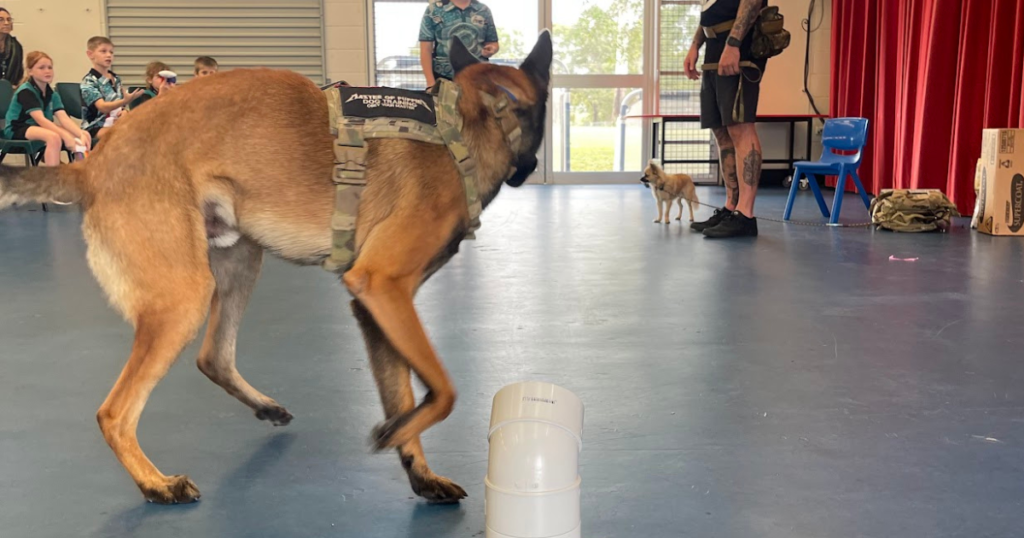
Puppy humping can be confusing, especially when it appears unexpectedly. Owners sometimes assume that mounting means their puppy has reached sexual maturity, but that is only one possible explanation.
Puppies are constantly experimenting with behaviours and learning how their environment works. Mounting can become part of that exploration.
1. Play and Excitement
Some puppies hump during energetic play.
A puppy may become highly excited while playing with another dog and temporarily struggle to regulate their arousal level. Mounting may then appear alongside chasing, wrestling, jumping, barking or other playful behaviours.
This does not necessarily indicate sexual intent.
Learning how to regulate excitement is an important part of puppy development. Structured puppy training can help puppies develop focus, impulse control and appropriate responses during stimulating situations.
2. Overstimulation
A puppy may start humping when there is simply too much happening.
Visitors arriving, several dogs playing together, a new environment or an extended play session can push some puppies beyond their ability to remain calm.
Signs of over-arousal may include:
- Repeated jumping
- Excessive barking
- Chasing
- Nipping
- Running around without settling
- Difficulty responding to familiar cues
- Mounting people, dogs or objects
- Rapidly switching between behaviours
In these situations, humping may be one sign that the puppy needs help returning to a calmer state.
3. Exploration
Young dogs investigate the world through their senses and behaviour. Mounting can simply become one of the behaviours they experiment with.
A puppy might hump:
- A soft toy
- A blanket
- A cushion
- Another puppy
- An adult dog
- A person’s leg
- A particular object
The object itself does not necessarily tell you why the behaviour is happening. The circumstances surrounding it are usually more useful.
4. Sexual Development
Hormonal changes can contribute to mounting as dogs mature.
Male dogs may show increased sexual behaviours around adolescence, although female dogs can also display mounting behaviour.
The timing of sexual maturity varies between individual dogs and can be influenced by breed, body size, genetics and development.
This is why there is no single age when every dog suddenly starts humping.
5. Stress or Frustration
Mounting can sometimes occur when a dog is emotionally uncomfortable or struggling to cope with a situation.
For example, a dog may hump after experiencing:
- A stressful environment
- Frustration
- A change in routine
- Excessive excitement
- Social pressure
- Difficulty settling
Looking at the entire behaviour picture is therefore more useful than treating humping as an isolated issue.
What Is the Difference Between Humping and Sexual Behaviour?
Humping and sexual behaviour are not always the same thing.
Mounting can occur without a clear sexual motivation, particularly in puppies and dogs that become highly excited during play or social interactions.
Sexual development can contribute to mounting as a dog matures, but context is important. Consider what happened immediately before the behaviour and whether other signs of sexual or reproductive behaviour are present.
For example, a puppy that mounts a toy after an energetic play session may be experiencing excitement or overstimulation rather than sexual motivation.
Likewise, a dog that repeatedly mounts another dog during intense interaction may need help managing arousal and learning when to disengage.
The behaviour itself provides only part of the picture. Age, environment, body language and the circumstances surrounding the mounting can all help explain what is happening.
At What Age Do Male Dogs Start Humping?

Male dogs can begin mounting behaviour during puppyhood, but it may become more noticeable as they approach adolescence and sexual maturity.
Some puppies may show mounting behaviour from a few months old, while others may rarely or never hump.
As a male dog matures, hormonal changes can increase sexual interest, but humping can still occur for non-sexual reasons.
For example, an adolescent male might hump during play because he becomes highly excited rather than because he is attempting to mate.
It is also important to remember that a male dog does not need to be sexually mature for mounting behaviour to occur.
At What Age Do Female Dogs Start Humping?
Female dogs can also hump, and the behaviour is not limited to males.
A female puppy may mount another dog, a toy or an object during play or excitement. Some adult female dogs continue to display mounting behaviour as well.
Hormonal changes associated with reproductive development can influence behaviour, but they are not the only explanation.
If a female dog suddenly begins mounting frequently, particularly when the behaviour is accompanied by other physical or behavioural changes, it is worth considering both behavioural and medical factors.
Is Humping Normal for Puppies?
In many cases, yes.
Occasional puppy humping can be a normal part of canine behaviour. The behaviour becomes more important to address when it is:
- Very frequent
- Difficult to interrupt
- Directed repeatedly towards people
- Causing conflict with other dogs
- Associated with intense arousal
- Appearing suddenly alongside other unusual behaviours
- Preventing the puppy from settling
- Becoming a persistent pattern
The goal is generally not to punish a puppy for humping. Instead, owners should try to understand the trigger and teach an appropriate alternative behaviour.
Does Humping Mean My Dog Is Dominant?
Not necessarily.
The idea that humping automatically means a dog is trying to establish dominance is an oversimplification.
Dogs can mount for many different reasons, including:
- Excitement
- Play
- Sexual motivation
- Stress
- Frustration
- Attention
- Learned behaviour
- Overstimulation
For example, if a puppy repeatedly becomes excited during play and then mounts another dog, a more useful question is:
“How can I help this puppy manage excitement and interact appropriately?”
rather than:
“How do I stop my dog from trying to dominate?”
Understanding canine body language and the context of the behaviour usually provides more useful information for deciding how to manage it.
Why Does My Puppy Hump Other Dogs?
When a puppy humps another dog, the surrounding interaction matters.
Watch what happens immediately before the mounting starts.
Ask yourself:
- Does my puppy become increasingly excited?
- Are the dogs wrestling intensely?
- Is my puppy struggling to disengage?
- Is the other dog trying to move away?
- Does the mounting happen repeatedly?
- Does the behaviour occur when play becomes too intense?
These details can help identify whether the behaviour is associated with play, over-arousal, social pressure or another trigger.
Not every dog appreciates being mounted. Even when the puppy means no harm, repeated mounting can create tension and may provoke a defensive response from another dog.
This is one reason why appropriate dog socialisation training is about more than simply exposing a puppy to lots of dogs.
Good socialisation helps puppies learn how to experience different dogs, people, environments and situations while developing appropriate responses and the ability to disengage when necessary.
Why Does My Dog Hump Me?
Dogs may hump people for several reasons.
It does not automatically mean the dog is sexually attracted to the person.
Possible triggers include:
Excitement
Your dog may become excited when you arrive home, start playing or interact enthusiastically with them.
Attention
If humping consistently results in attention, talking, pushing or another reaction, the behaviour may accidentally become reinforced.
Over-arousal
Some dogs struggle to regulate excitement and may redirect that energy into mounting.
Habit
A behaviour that has repeatedly occurred without an appropriate alternative can become a learned pattern.
If your dog frequently jumps, mouths or mounts people, teaching calm behaviour and impulse control can be more productive than repeatedly telling the dog “no”.
How to Stop a Puppy From Humping
The best approach depends on the reason for the behaviour.
Rather than relying on punishment, focus on management, calm interruption and teaching an alternative response.
1. Identify the Trigger
Start keeping track of when the humping happens.
Ask yourself:
- What happened immediately beforehand?
- Who was present?
- Was the dog playing?
- Was the environment busy?
- Was the dog tired?
- Was the dog frustrated?
- Was the dog interacting with another dog?
- Did the behaviour happen after receiving attention?
Patterns often become easier to identify when you observe the behaviour objectively.
2. Interrupt Early
If you know the signs that occur before mounting, intervene before the behaviour becomes intense.
You might calmly redirect your puppy towards:
- A recall
- A sit
- A place behaviour
- A toy
- A short break
- A calm interaction
The appropriate response depends on the individual dog and the environment.
3. Reward Calm Behaviour
Dogs need to learn what you want them to do.
If your puppy is calmly sitting beside you instead of jumping or mounting, reinforce that behaviour.
Rewarding calmness can help create a stronger pattern over time. This can be particularly useful for puppies that become overexcited easily.
4. Manage Play Sessions
If humping occurs during play, avoid allowing the interaction to escalate endlessly.
Short breaks can help puppies reset before returning to an appropriate activity.
The aim is not necessarily to stop every exciting interaction. It is to help the puppy learn that excitement does not mean losing control.
5. Teach Useful Foundation Behaviours
Basic obedience can give you practical tools for managing unwanted behaviour.
Useful skills can include:
- Sit
- Stay
- Recall
- Place
- Leave it
- Focus
- Calm settling
A puppy that can respond to a handler despite distractions has more options than a puppy that only responds in a quiet environment.
For owners working through broader obedience challenges, obedience training for puppies and dogs can provide a structured foundation.
Should You Punish a Dog for Humping?
Punishment is generally not the first choice for addressing humping.
Shouting, physically correcting or frightening a dog may interrupt the behaviour temporarily, but it does not necessarily address the reason the dog was mounting in the first place.
In some situations, punishment can also increase stress or excitement.
A more productive approach is to:
- Identify the trigger.
- Interrupt calmly.
- Remove the dog from the situation if necessary.
- Ask for an appropriate behaviour.
- Reinforce calm behaviour.
- Adjust the environment to prevent repeated rehearsal.
Training works best when the dog understands what behaviour is expected instead of simply learning that one behaviour produces punishment.
Does Desexing Stop Humping?
Desexing can reduce some hormone-related sexual behaviours in certain dogs, but it is not a guaranteed way to stop humping.
This is because mounting can have multiple causes.
If a dog has developed a strong habit of mounting during excitement, play, stress or frustration, the behaviour may continue even when hormonal influences are reduced.
Decisions about desexing should be discussed with your veterinarian, taking your individual dog’s age, breed, health, development and circumstances into account.
The RSPCA Australia also provides information for pet owners about responsible pet care and desexing.
Behavioural training may still be useful regardless of whether a dog is desexed.
When Is Puppy Humping a Problem?
Occasional mounting is not necessarily concerning.
However, owners should take a closer look when the behaviour becomes persistent or creates problems.
For example, professional guidance may be useful if your dog:
- Constantly attempts to mount other dogs
- Becomes difficult to control during interactions
- Ignores attempts to interrupt the behaviour
- Mounts people repeatedly
- Becomes frustrated when prevented from mounting
- Causes conflict with other dogs
- Shows other signs of anxiety, reactivity or over-arousal
- Suddenly develops frequent mounting behaviour
A broader behaviour assessment can help determine whether humping is part of a larger training or behavioural issue.
For dogs experiencing more complex behaviour challenges, dog behaviour training on the Gold Coast can help owners understand the broader pattern and work towards more appropriate responses.
When Should a Veterinarian Check Humping Behaviour?
Behavioural causes are common, but a sudden or unusual increase in mounting should not automatically be treated as a training problem.
Speak with your veterinarian if humping is accompanied by signs such as:
- Excessive licking of the genital area
- Difficulty urinating
- Frequent urination
- Discomfort
- Skin irritation
- Pain
- Unusual discharge
- Sudden major behaviour changes
Physical discomfort or medical problems can sometimes influence behaviour.
A veterinarian can help rule out health-related causes before you focus entirely on training.
For additional veterinary information, the Merck Veterinary Manual is another useful general reference for pet owners and animal-health information.
Humping and Other Puppy Behaviours
Humping rarely exists in isolation.
A puppy who frequently becomes overexcited may also display:
- Jumping
- Barking
- Mouthing
- Pulling
- Chasing
- Difficulty settling
- Poor impulse control
That is why looking at the dog’s overall behaviour is important.
For example, if your puppy listens perfectly in a quiet room but becomes difficult to manage around other dogs, the issue may be related to distraction, arousal or insufficient practice in more challenging environments.
Similarly, if your dog becomes extremely excited whenever another dog appears, understanding why dogs become overexcited around other dogs can be useful for identifying the bigger pattern.
The goal is not simply to remove one behaviour. It is to help the dog develop better skills for handling everyday situations.
How Puppy Socialisation Can Help
Socialisation is sometimes misunderstood as allowing puppies to interact with every dog they meet.
Good socialisation is much broader.
A well-socialised puppy learns how to experience different people, environments, sounds, surfaces, situations and dogs while remaining comfortable and responsive.
That includes learning:
- When to engage
- When to disengage
- How to settle
- How to respond to boundaries
- How to interact appropriately
- How to cope with excitement
- How to focus on their handler
Controlled experiences can be more useful than overwhelming a puppy with constant interaction.
This can be particularly important for puppies that become highly aroused around other dogs.
What Age Do Dogs Usually Reach Sexual Maturity?
There is no universal age when every dog reaches sexual maturity.
Some dogs mature relatively early, while others develop later. Breed, body size, genetics and individual development can all influence timing.
This is why the appearance of humping should not be used as a precise indicator of sexual maturity.
A puppy may hump before becoming sexually mature, while another dog may reach sexual maturity without displaying frequent mounting.
In other words, humping behaviour and sexual maturity can be related, but they are not the same thing.
A Simple Way to Respond When Your Puppy Humps
If your puppy begins humping during an interaction, try this general sequence.
Step 1: Stay Calm
Avoid turning the situation into a highly emotional confrontation.
Step 2: Interrupt
Use a calm cue or guide your puppy away from the trigger.
Step 3: Create Space
Give your puppy an opportunity to settle if they are highly aroused.
Step 4: Ask for an Alternative
Use a behaviour your puppy understands, such as sitting, coming to you or settling in place.
Step 5: Reinforce the Alternative
Reward the calm behaviour you want to see repeated.
Step 6: Look for the Pattern
If it happens repeatedly, identify what consistently triggers it.
This approach gives you useful information while helping your dog practise a more appropriate response.
Frequently Asked Questions About Dog Humping
At What Age Do Dogs Start Humping?
Dogs can begin humping during puppyhood, sometimes from just a few months of age, although there is significant individual variation. Humping can occur before sexual maturity and may be related to play, excitement, stress, attention or sexual development.
Do Puppies Hump Before Puberty?
Yes. Puppies can display mounting behaviour before reaching sexual maturity. Early humping is not necessarily evidence that a puppy has entered puberty or is sexually motivated.
Why Does My 4-Month-Old Puppy Hump?
A 4-month-old puppy may hump because of excitement, play, overstimulation, exploration, attention or developing hormones. Look at what happens immediately before the behaviour to identify the likely trigger.
Why Does My Puppy Hump Toys?
Some puppies hump toys, blankets or cushions as part of exploration, excitement or self-stimulating behaviour. If it is occasional and easy to interrupt, it may not be a major concern.
Is Humping a Sign of Dominance in Dogs?
Not necessarily. Humping has several possible causes, and dominance is an overly simplistic explanation. Context, body language, environment and the dog’s emotional state provide more useful information.
Do Female Dogs Hump?
Yes. Female dogs can hump other dogs, people or objects. The behaviour can occur during puppyhood and adulthood and is not exclusive to male dogs.
Will My Dog Stop Humping as It Gets Older?
Some dogs naturally hump less as they mature, while others continue the behaviour. Whether it decreases depends on why the dog is doing it, how frequently it occurs and whether it has become a learned habit.
Does Desexing Stop a Dog From Humping?
Desexing may reduce some hormone-related mounting, but it does not guarantee that humping will stop because mounting can also be associated with excitement, play, stress or learned behaviour.
Should I Stop My Puppy From Humping Other Dogs?
If the behaviour is frequent, unwanted or causing tension with another dog, it is sensible to calmly interrupt it. Not every dog welcomes being mounted, so owners should monitor interactions and give dogs space when necessary.
Is Puppy Humping Normal?
Occasional humping can be normal puppy behaviour. However, persistent, intense or difficult-to-interrupt mounting may indicate that the puppy needs help with arousal, impulse control, social interactions or another underlying issue.
Can Training Reduce Humping?
Training can help when humping is connected to excitement, poor impulse control, frustration or learned habits. Teaching focus, recall, place, calmness and appropriate disengagement gives the dog alternative behaviours.
What Age Do Dogs Reach Sexual Maturity?
There is no single age that applies to every dog. Sexual maturity varies according to factors such as breed, size, genetics and individual development. Humping should therefore not be used by itself as an indicator that a dog has reached sexual maturity.
When Should I Get Help for a Humping Dog?
Consider professional behavioural guidance if mounting is persistent, difficult to interrupt, causing conflict with other dogs, directed frequently towards people, or occurring alongside broader behaviour problems such as anxiety, reactivity or extreme over-arousal.
Final Thoughts: Understanding Why Dogs Hump
So, at what age do dogs start humping? There is no single age that applies to every dog. Puppies can begin mounting during early development, sometimes from just a few months of age, while hormonal and sexual behaviours may become more noticeable as dogs approach adolescence and maturity.
The most important point is that humping does not automatically mean sexual behaviour or dominance.
A puppy may hump because they are excited, overstimulated, playing, exploring, frustrated or developing sexually. The context tells you much more than the behaviour alone.
Instead of focusing only on stopping the mounting, look at what happens before it. Identify triggers, manage exciting situations, interrupt calmly and teach your dog what to do instead.
If humping is part of a wider pattern involving poor impulse control, over-excitement, social difficulties or other behaviour concerns, addressing the underlying behaviour can be much more effective than simply trying to suppress the mounting.
For owners looking for structured guidance with puppy development, obedience and behaviour, Master Of Puppies provides dog training and behaviour support on the Gold Coast.
You can explore the available dog training services and choose the option that best fits your dog’s needs.
If your dog’s behaviour is becoming difficult to manage, book a Behaviour Assessment to identify the underlying issue and create a clearer training pathway.
Key Takeaways
- Puppies can start humping before reaching sexual maturity.
- Some dogs may begin mounting from just a few months of age, but timing varies.
- Male and female dogs can both hump.
- Humping is not automatically a sign of dominance.
- Play, excitement, overstimulation, stress, frustration and sexual development can all contribute.
- Punishment is not usually the best first response.
- Calm interruption and alternative behaviours can help.
- Persistent or sudden humping may warrant professional or veterinary assessment.
- Understanding the trigger is more useful than focusing only on stopping the behaviour.