
How to teach a puppy to sit is one of the first useful skills you can work on with a young dog. Your puppy might sit perfectly when you have a treat in your hand, then suddenly act as though they have never heard the word “sit” the moment you step outside.
That is actually quite normal. A puppy may understand the behaviour in a quiet kitchen but struggle to respond when there are new smells, people, sounds or other dogs around. Dogs do not automatically understand that something learned in one place applies everywhere else.
The good news is that you can build this skill step by step. Start somewhere quiet, use a reward to help your puppy find the sitting position, and reward the exact moment they get it right. As your puppy becomes more confident, you can practise the same behaviour in different places and around everyday distractions.
Teaching a puppy to sit is a useful starting point because the behaviour is simple to practise during normal routines. You can ask for a sit before putting the lead on, before placing down their food bowl or when greeting someone at the door.
The aim is not to make your puppy perfect in one training session. It is to help them understand what you are asking and gradually build a response they can use in real-life situations.
If you are working through the basics with a young dog, structured puppy training on the Gold Coast can provide additional support and a consistent environment for developing those skills.
Quick Answer: How Do You Teach a Puppy to Sit?
Start in a quiet area with a small food reward. Hold the reward close to your puppy’s nose, then slowly move it upwards and slightly back. As your puppy follows the movement, their bottom will often naturally move towards the floor.
The instant their bottom touches the ground, reward them.
Once your puppy is regularly offering the movement, start pairing it with the word “sit”. After that, gradually reduce your reliance on the food lure and practise in different locations.
The important part is timing. Your puppy needs to understand exactly which behaviour earned the reward.
Why Should You Teach a Puppy to Sit?
“Sit” is more than a trick.
It can become a useful behaviour that you ask for before everyday activities such as putting on a lead, opening a door, greeting someone or receiving a meal.
For example, instead of your puppy jumping at the kitchen bench while you prepare dinner, you can begin teaching them that sitting gives them a chance to receive attention or a reward.
It also gives you a simple way to get your puppy’s attention without constantly physically moving them around.
That does not mean your puppy will suddenly become calm just because they know how to sit. A young dog still needs to learn how to manage excitement, distractions and impulse control.
Think of “sit” as one small piece of a much bigger set of everyday skills.
When Can You Start Teaching a Puppy to Sit?
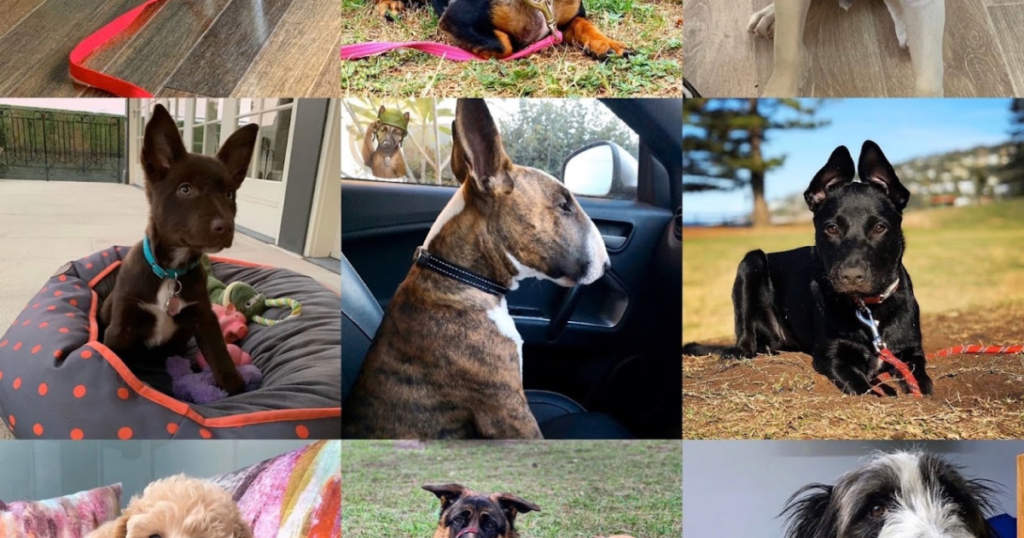
You can start teaching a puppy simple behaviours from a young age.
There is no need to wait until your puppy is several months old before beginning basic training. In fact, short training sessions can become part of your puppy’s normal routine quite early.
At first, your puppy may only concentrate for a few seconds. That is fine.
You are not trying to run a formal training class in your living room. You might practise three or four repetitions while waiting for their dinner, then stop. Later, you can do another short session.
Keep Your Puppy’s Age and Temperament in Mind
Not every puppy learns at the same speed.
One puppy might enthusiastically follow a food lure straight into a sit. Another may be more interested in sniffing the floor, investigating the room or chewing the treat rather than following your hand.
That does not necessarily mean one puppy is “better” at training.
Their motivation, environment, energy level and previous experience all affect how much they can focus.
Keep the early sessions short enough that your puppy still wants to participate.
How to Teach a Puppy to Sit Step by Step
The easiest way to teach sit is to break the behaviour into small pieces rather than expecting your puppy to understand the verbal command immediately.
1. Choose a Quiet Training Environment
Start somewhere with very few distractions.
Your living room or another quiet area can work well. Avoid beginning the first session beside a busy road, in a dog park or somewhere your puppy has never seen before.
You want your puppy thinking about you rather than everything happening around them.
Keep a few small treats ready and give yourself enough space to move your hand comfortably.
Why the Environment Matters
Imagine asking a puppy to concentrate while another dog is running around, someone is calling their name and there are dozens of interesting smells nearby.
That is a very different training exercise from asking for a sit in a quiet kitchen.
Good dog training and behaviour work starts at a level where the dog has a reasonable chance of succeeding.
Once your puppy understands the behaviour, you can slowly introduce more distractions.
2. Get Your Puppy’s Attention
Let your puppy know you have something worth paying attention to.
Hold a small treat close enough for them to notice without waving it around constantly.
Wait for your puppy to focus on your hand.
You do not need to say “sit” yet.
At this stage, you are simply helping your puppy understand that following your hand can lead to a reward.
3. Use a Reward to Guide the Movement
Bring the treat towards your puppy’s nose.
Then move your hand slowly upwards and slightly backwards over their head.
Most puppies will naturally follow the movement with their nose. As their head comes up, their bottom may begin moving towards the floor.
As soon as their bottom touches the ground, give the reward.
Timing matters here.
If your puppy sits and you wait several seconds before rewarding them, they may not clearly understand what earned the treat.
Let the Puppy Discover the Position
Try not to push your puppy’s bottom down.
It may seem like a quicker way to show them what you want, but physically forcing the position does not teach the puppy how to offer the behaviour themselves.
Instead, allow them to work it out.
Some puppies will sit immediately. Others may walk backwards, turn sideways or keep trying to reach the treat.
If your puppy is struggling, make the movement of your hand slower and easier rather than repeatedly moving the treat over their head.
4. Introduce the Word “Sit”
Once your puppy is regularly following the movement into a sitting position, start pairing the behaviour with the word “sit”.
Say the word once in a calm voice as you begin guiding the movement.
When the puppy sits, reward them.
After enough repetitions, your puppy can start connecting the sound of the word with the action.
Avoid saying:
“Sit, sit, sit, sit!”
while waiting for the puppy to respond.
If you repeat the cue over and over, the puppy can learn that the first word does not really matter because another one is coming.
Give the cue once, then help them succeed.
5. Reward at the Right Moment
The reward should arrive immediately after the behaviour you want.
If your puppy sits and then jumps up before receiving the treat, be careful about rewarding the jumping rather than the sitting.
You can keep the reward low and calm.
Once your puppy understands the exercise, start varying the reward. Sometimes it might be food. Sometimes praise, a toy or access to something the puppy wants can be useful.
If you want more personalised support while working through obedience skills, private dog training can also help identify where a puppy is getting stuck.
Teach a Release Word Too
One small detail that can make sit training much clearer is teaching your puppy when the behaviour is finished.
For example, you might use a word such as “okay” as a release.
Ask for the sit.
Reward your puppy.
Pause.
Then use your release word and allow them to move.
This helps your puppy learn that “sit” does not necessarily mean they have to remain frozen forever. Later, the same idea becomes useful when you introduce longer duration behaviours such as stay or place.
How Long Does It Take to Teach a Puppy to Sit?
Some puppies pick up the basic movement within a few minutes. Others need several short sessions before the behaviour starts making sense.
Learning the movement and responding reliably to a verbal cue are two different things.
Your puppy may understand how to sit but still fail to respond when:
- another dog is nearby
- visitors arrive
- they are excited
- you are holding their dinner
- they are outside
- there are unfamiliar smells
- they are tired or overstimulated
That is why it is better to think about progress in stages rather than expecting perfect results after one training session.
A few successful repetitions repeated throughout the day can be more useful than one long session where your puppy becomes frustrated or bored.
How to Teach a Puppy to Sit Without a Treat in Your Hand
Many puppies quickly learn to follow a food lure.
The next step is making sure they are responding to your cue rather than simply following the smell of food.
Once your puppy understands the movement, use the same hand motion without holding a treat.
When your puppy sits, reward them from your other hand or from your treat pouch.
This teaches your puppy that the empty hand can still mean something useful.
Gradually Reduce the Frequency of Food Rewards
You do not need to stop using food completely.
Instead, avoid making the food visible before every repetition.
For example:
- Ask for sit.
- Puppy sits.
- Mark the behaviour with praise or another consistent marker.
- Reward.
- Repeat without showing the food first.
Over time, you can vary the reward.
Your puppy should learn that listening to you is worthwhile even when they cannot see a treat.
What If My Puppy Will Not Sit?
First, avoid immediately assuming your puppy is being stubborn.
Ask yourself what changed.
Did you move to a new room?
Is another dog nearby?
Is your puppy tired?
Are they too excited?
Is the treat actually motivating them?
Did you make the hand movement too quickly?
Training problems often become easier to solve when you look at what happened immediately before the behaviour stopped.
Go Back One Step
If your puppy was sitting reliably yesterday but cannot do it at the park today, the answer may simply be that the exercise became too difficult too quickly.
Move back to an easier environment and get a few successful repetitions again.
This is also relevant when a puppy seems to listen perfectly inside but falls apart outside. Understanding why a puppy listens at home but not outside can help you choose the right level of distraction.
Training is not a straight line.
Sometimes you move forward. Sometimes you make the exercise easier again.
Common Mistakes When Teaching a Puppy to Sit
Even a simple behaviour can become confusing if the training is inconsistent.
Repeating the Cue
Saying “sit” five times does not make the puppy understand it faster.
Say the cue once, give them a moment and then help them succeed.
Training for Too Long
Puppies have limited attention spans.
If your puppy starts wandering away, biting the treat, jumping around or losing interest, the session may have gone on long enough.
Finish on a successful repetition and try again later.
Rewarding Too Late
The closer the reward is to the desired behaviour, the easier it is for your puppy to make the connection.
Adding Too Many Distractions Too Soon
A puppy that can sit in the kitchen is not automatically ready to sit beside a busy footpath.
Build up gradually.
Physically Forcing the Sit
Avoid pushing your puppy’s bottom onto the floor.
Let the puppy learn how to perform the movement rather than simply being placed into it.
Expecting Perfect Obedience
Puppy training is a learning process.
Your puppy will sometimes get it wrong.
The useful question is not “Why won’t my puppy listen?” but “What can I change to make the next repetition easier?”
Teaching a Puppy to Sit Around Distractions
Once your puppy can sit reliably in a quiet room, start changing one thing at a time.
You could practise:
- near the front door
- in the backyard
- while someone walks past
- before putting the lead on
- near a quiet outdoor area
- around familiar people
- around mild everyday noises
Do not jump from a quiet kitchen straight into the busiest environment you can find.
Practise Around Everyday Distractions
Imagine your puppy sits beautifully at home but immediately gets up when you pick up the lead.
Instead of taking them straight to a busy park, practise near the front door.
Ask for a sit.
Pick up the lead.
If they stay, reward them.
Repeat.
Then make the exercise slightly harder.
This is how you turn a behaviour your puppy knows into one they can actually use in everyday life.
Over time, these small exercises contribute to reliable dog obedience skills.
How to Teach a Puppy to Sit Before Meals
Mealtimes provide a useful opportunity to practise because the reward is already part of the routine.
Before putting the food bowl down, ask for a simple sit.
If your puppy already understands the behaviour, wait for the sit rather than repeatedly saying the cue.
Once they sit, place the bowl down and release them to eat.
Keep this calm.
You do not need to turn every meal into a long obedience session.
The lesson is simply that waiting and responding to a cue can become part of the normal routine.
Teaching “Sit” as Part of Good Puppy Manners
A useful sit is one your puppy can offer when something interesting is happening.
For example, you might eventually use it before:
- greeting visitors
- opening a door
- getting into the car
- receiving a toy
- going outside
- putting on a lead
- saying hello to someone
This creates little moments throughout the day where your puppy gets to practise self-control.
It also gives you a chance to work on other skills at the same time.
Good puppy socialisation training is not just about making a puppy interact with everyone and everything. It also involves helping them learn how to behave appropriately around different people, dogs, environments and experiences.
What Should You Teach After “Sit”?
Once your puppy understands sit, there is plenty more to work on.
Stay
Teach your puppy that remaining in position for a short period is different from simply sitting.
Start with very short durations.
Recall
A reliable recall is one of the most useful skills a dog can learn.
Start in controlled environments and gradually increase the distance and distractions. Dog recall training can be particularly useful when you are working towards reliable responses outside the home.
Loose-Leash Walking
Walking politely on a lead takes more than knowing how to sit.
Your puppy needs to learn that pulling does not automatically take them where they want to go.
If lead walking is becoming difficult, learning how to stop your dog pulling on the lead can help you approach the problem systematically.
Place and Settling
A puppy also needs to learn how to switch off.
Teaching your dog to settle on a bed or designated place can be especially useful when the household is busy.
Appropriate Greetings
Jumping up can become a habit very quickly.
A sit can eventually become part of a calmer greeting routine, although you will still need to practise around real people and different levels of excitement.
How Puppy Training Supports Long-Term Behaviour
Teaching sit is only one small exercise.
The bigger value comes from teaching your puppy how to respond to guidance, work around distractions and make better choices during everyday situations.
A puppy that learns to sit on cue can then begin learning when to wait, when to move, where to settle and how to respond when something exciting happens.
Those skills do not appear overnight.
They develop through repetition, consistency and sensible progression.
This is why puppy training should not be viewed as teaching a list of commands and ticking them off one by one. The useful part is being able to apply those behaviours outside the training session.
Puppy Training on the Gold Coast
For Gold Coast puppy owners, professional training can provide structure when basic exercises at home are no longer enough.
At Master Of Puppies, puppy training focuses on practical obedience, communication, confidence and behaviour around real-life distractions.
Training is provided at the Molendinar Canine Conditioning Centre and other dedicated training environments rather than as an in-home service.
The approach is led by Will Paton, Founder and Head Trainer, with experience as an Australian Special Forces Military Working Dog Handler.
Whether your puppy needs help with basic obedience or you are dealing with a more challenging behaviour, the right training plan should take the individual dog, environment and goals into account.
You can learn more about working with a dog trainer on the Gold Coast and the training options available.
Frequently Asked Questions
What is the easiest way to teach a puppy to sit?
Start with a small food reward in a quiet environment. Move the reward slowly upwards and slightly backwards so your puppy naturally moves into a sitting position. Reward immediately when their bottom reaches the floor, then introduce the verbal cue once the movement becomes predictable.
What age can a puppy learn to sit?
Young puppies can begin learning simple behaviours from an early age. Keep sessions short and adjust the difficulty to suit the puppy’s attention span and temperament.
How long does it take to teach a puppy to sit?
Some puppies learn the basic movement quickly, while others need several short sessions. Reliable sit behaviour around distractions usually takes longer because the puppy has to learn how to respond in different environments.
Should I push my puppy’s bottom down to make them sit?
It is better not to physically force your puppy into position. Use a lure or hand movement to encourage the puppy to discover the position themselves, then reward the correct behaviour.
Why does my puppy sit at home but not outside?
Outside environments contain more distractions, smells, movement and sounds. Your puppy may understand the behaviour but not yet have enough experience using it in a more stimulating environment. Make the transition gradually.
How do I teach my puppy to sit without treats?
Once your puppy understands the movement, stop showing the treat before giving the cue. Use an empty hand signal, then reward from your other hand after the puppy responds. Gradually vary how and when you reward.
Why does my puppy sit and then immediately get up?
Your puppy may not understand that you want them to remain there yet. Keep the initial duration very short and introduce a clear release word so they learn when the behaviour is finished.
How many times should I practise sit each day?
There is no need for long sessions. Several short opportunities throughout the day can work well. You might practise a few repetitions before meals, during play breaks or before going outside.
Can I teach my puppy to sit around other dogs?
Yes, but introduce distractions gradually. If your puppy cannot focus around other dogs yet, increase the distance and work at a level where they can still respond to you.
Is teaching sit enough for puppy obedience?
No. Sit is a useful foundation, but puppies also need to learn recall, lead skills, settling, impulse control, appropriate greetings and how to respond around distractions.
When should I consider professional puppy training?
Professional support can be useful when you are unsure how to progress, your puppy is struggling with distractions, or a behaviour is becoming difficult to manage. Getting guidance early can help prevent small training problems from becoming established habits.
Final Thoughts
Teaching a puppy to sit is simple, but doing it well takes more than holding a treat over their head.
Start somewhere easy. Give your puppy a chance to work out what you are asking. Reward the right moment, keep sessions short and gradually introduce real-life distractions.
And if your puppy forgets everything the second you step outside, do not assume the training has failed. It usually means you have moved to a harder environment before your puppy was ready.
Build the skill again, make the next step manageable and keep practising.
For puppies that need more structured support, you can Book a Behaviour Assessment with Master Of Puppies.